X influencer marketing uses creators on the platform to drive either awareness or measurable demand, and the outcome depends on which goal you pick before you brief anyone. Later's 2025 data shows brands moving past vanity metrics toward ROI-based programs, and the FTC requires clear disclosure on every paid post. Choose your primary outcome first.
TL;DR:
- Choose one outcome before outreach, then match its KPI: qualified impressions and profile visits for awareness, or conversions and acquisition cost for demand.
- Vet creators for buyer overlap, relevant conversations, genuine replies, and consistent posting; follower totals alone reveal little about whether their audience can become customers.
- Use pages tagged with UTM parameters for traffic and signups, unique codes for creator redemptions, and deep links with install tracking for app campaigns.
- Brands and creators must place clear ad disclosures beside endorsements and repeat them in shareable thread posts; X’s disclosure tool alone is insufficient.
- Keep briefs to the goal, buyer insight, constraints, trackable call to action, and disclosure rules; let creators use their own voice rather than scripts.
Table of Contents
- Why X Works for Influencer Marketing Right Now
- Set Campaign Goals and KPIs for X
- Find and Vet Creators on X
- Briefing Creators and Native Formats That Perform
- Measurement, Tracking, and Attribution for X Campaigns
- Compliance and Disclosure: FTC Guidance and Practical Checks
- Tools, Brief Examples, and a Quick-Start Checklist
- What Marketers Get Wrong About X Influencer Campaigns
- A Managed Option for Performance-First Creator Campaigns
- FAQ
- Sources
Why X Works for Influencer Marketing Right Now
X rewards real-time, conversational content in a way few other platforms do. A creator's reply thread, hot take, or product mention can surface in front of a relevant audience quickly, which makes the platform strong for reaching buyers already discussing a category, a tool, or a problem.
Later's 2025 research found that brands are shifting budget toward micro and mid-tier creators and away from reach-only metrics, a trend that fits X particularly well since smaller, topic-focused accounts often carry more credibility there than celebrity accounts do.
X tends to suit awareness goals when you need to seed a conversation or build category credibility. It suits demand capture when a creator's audience already searches for, compares, or buys products like yours.
Set Campaign Goals and KPIs for X
Before any outreach, commit to one primary outcome. Trying to optimize for awareness and signups at once dilutes both the creative brief and the measurement plan, and Later's research ties stronger ROI to campaigns built around a single defined goal.
Common primary outcomes to choose from:
- Awareness: building category or brand familiarity with a new audience.
- Qualified traffic: driving visits from people likely to convert later.
- Signups or trials: moving prospects into a funnel you already own.
- App installs: converting attention directly into product usage.
- Conversation seeding: getting a topic or launch discussed organically.
Once you pick the outcome, the KPIs follow directly. Awareness campaigns should track qualified impressions and profile visits, not raw view counts. Demand-capture campaigns should track clicks, signups, trials, demos, installs, or cost per acquisition.
Before reaching out to a single creator, confirm three things: your target buyer audience, the exact call to action, and the tracking method you will use to attribute results.
Find and Vet Creators on X
Reach is the easiest number to see and the least useful one to chase. Later's 2025 findings point to relevance and buyer overlap mattering more than follower count, especially for B2B or technical products where the total addressable audience is small to begin with.
A workable discovery and vetting process looks like this:
- Search and list-build using keyword and topic search operators, plus curated X lists already built around your category.
- Monitor relevant communities and reply threads to see which accounts already drive real discussion, not just likes.
- Check audience samples by reviewing a creator's follower list and recent replies for bot activity, irrelevant geography, or mismatched interests.
- Score engagement and cadence: a consistent posting rhythm with real replies beats a sporadic account with inflated impressions.
- Review prior brand behavior: look at how a creator has handled past sponsored posts, including whether disclosures were clear and consistent.
Pro Tip: Review replies on a creator's recent posts; genuine back-and-forth with followers is a better signal than their follower count.
For a structured version of this process across a full campaign, our operational pillars of creator campaign management walk through discovery, briefing, and execution in sequence.
Briefing Creators and Native Formats That Perform
A brief that runs long gets ignored. The minimal effective version covers the essentials: the campaign goal, one insight about the buyer, any facts or constraints the creator must respect, a clear call to action with a trackable destination, and explicit disclosure instructions.
Format matters as much as message. Native formats that tend to work on X include:
- Short text-first posts that mirror how the creator already writes.
- Short videos or clips for product demonstrations or reactions.
- Threaded explainers for more technical or comparison-driven products.
- Quote tweets that let a creator respond to existing conversation.
- Unique promo-code mechanics that double as both an incentive and a tracking tool.
Give the creator room to use their own voice within the brief's constraints. Overwritten scripts tend to underperform looser, fact-anchored guidance, because audiences on X can usually tell when a post has been handed to someone word for word.
Measurement, Tracking, and Attribution for X Campaigns
Match your tracking method to the outcome you picked earlier. Awareness campaigns should rely on verified-view reporting and qualified impressions. Demand-capture campaigns need harder signals: clicks, installs, signups, and cost per acquisition, consistent with Later's 2025 guidance on moving past vanity metrics.
| Tracking method | Best for | What it measures |
|---|---|---|
| Deep links + SDK install tracking | App installs | Attributed installs and in-app events |
| UTM-tagged landing pages | Qualified traffic, signups | Clicks, session source, conversions |
| Unique promo codes | Demand capture, CPA | Redemptions tied to a specific creator |
| Platform verified-view reporting | Awareness | Confirmed human views, not raw impressions |
For app marketers specifically, pairing creator deep links with install tracking closes the gap between a creator's post and an actual download, and our guide on tracking influencer installs covers the setup in more detail.
Pick one single-source KPI as your north star metric for the campaign, then use lift tests or paid amplification to confirm whether the creator's organic reach alone moved the number or whether it needed a paid push behind it. For teams building a more formal measurement framework, Skopos's guide to measuring marketing ROI offers a useful structure for connecting creative tests to business outcomes.

Compliance and Disclosure: FTC Guidance and Practical Checks
The FTC's endorsement guidance requires that any material connection between a brand and a creator be disclosed clearly and conspicuously, placed with the endorsement itself rather than buried in a bio or a linked page. This applies to paid placements, gifted products, employment relationships, and family ties, and responsibility sits with both the brand and the creator, not with X's own labeling tools.
Practical checks worth building into every campaign:
- Use explicit terms like "ad" or "#ad" placed in-line with the post, not hidden in a hashtag string.
- Repeat disclosure for live or multipart content, since a single disclosure at the start of a thread is not enough if later posts get shared independently.
- Add disclosure requirements to the contract, not just the creative brief.
- Require pre-approval on at least the first post in a new creator relationship.
- Monitor live posts after launch to confirm disclosure language survived the final edit.
A detail many marketers miss: the FTC does not treat a platform's built-in disclosure label as sufficient on its own. The brand and creator remain jointly responsible for making the connection obvious. Our breakdown of FTC disclosure rules covers wording examples and edge cases. This guidance reflects U.S. rules; campaigns running in other countries should confirm local advertising and consumer-protection requirements separately.
Tools, Brief Examples, and a Quick-Start Checklist
Four tool categories cover most of what a campaign needs: creator discovery platforms, compliance monitoring tools, deep-link or install trackers, and reporting dashboards that consolidate results across creators.
Two compact templates to adapt:
- Awareness template: a threaded explainer from a mid-tier creator, measured against verified views and profile visits over a campaign period.
- Demand-capture template: a short video post with a unique promo code and a deep link, measured against installs and cost per acquisition.
A starter checklist to run a pilot:
- Pick one outcome before any outreach begins.
- Shortlist creators vetted for relevance over raw reach.
- Brief them and require disclosure in writing, with contract language.
- Set up tracking before the first post goes live, not after.
- Run a pilot and evaluate against your single KPI.
For a faster setup on the tracking side, our guide to agency-ready creator landing pages outlines a build timeline.
What Marketers Get Wrong About X Influencer Campaigns
Most teams treat creator marketing on X as a reach play when it works better as a targeting play. A single relevant creator with a few thousand true buyers in their audience will usually outperform a larger account whose followers have no real overlap with the product.
Paid amplification behind a creator's organic post shortens the learning cycle considerably, because it lets you test a creative angle against a larger sample before deciding whether to repeat it. The operational lesson that matters most: track one definitive KPI from day one and let the creative adjust around that number, not the other way around.
— Jax
A Managed Option for Performance-First Creator Campaigns
Running creator discovery, briefing, disclosure, and tracking in-house takes real operational time, and that is the gap our commission-only creator network at Cult Media was built to close. We manage creator campaigns on a performance basis rather than for a flat retainer.
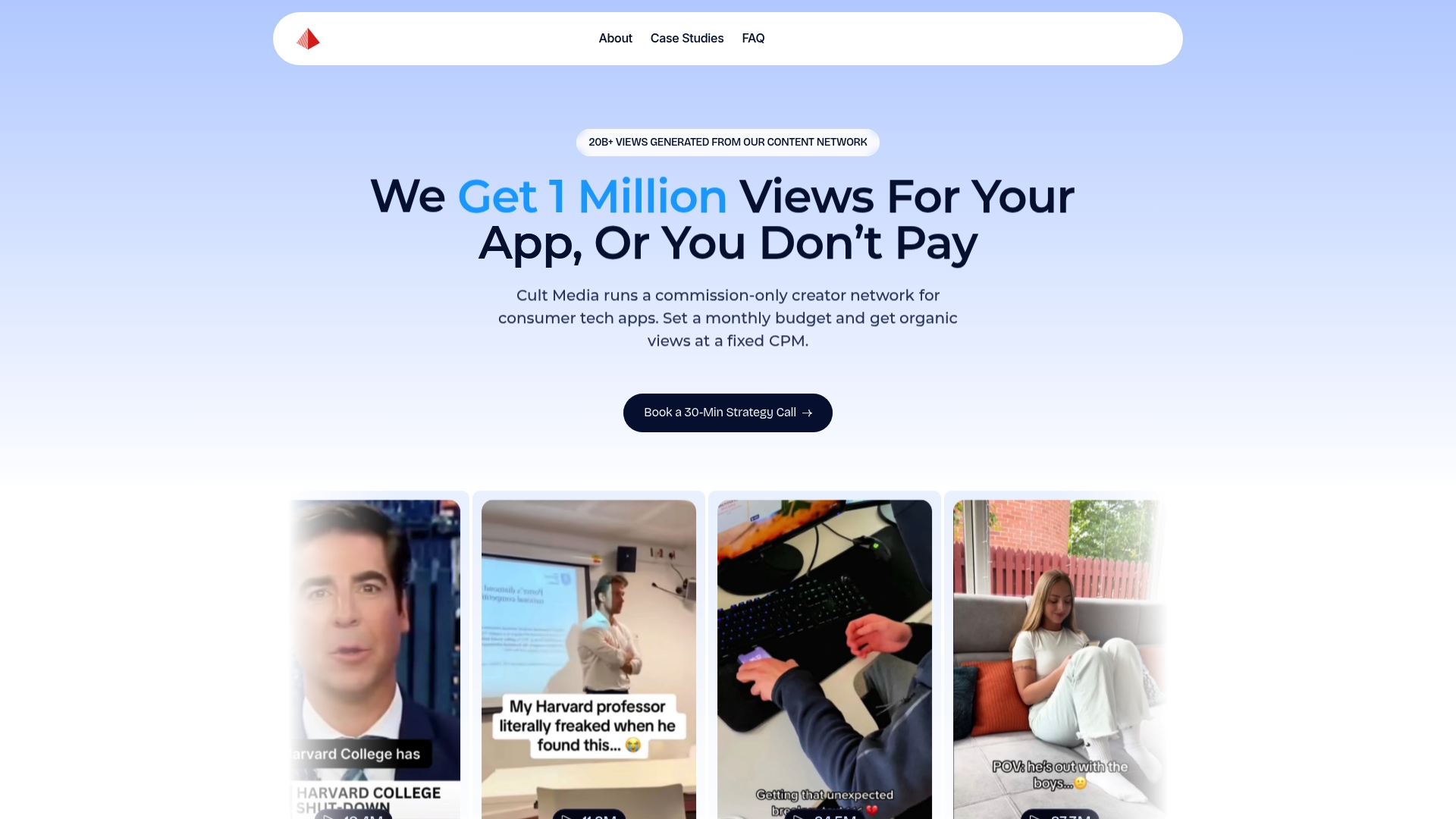
That structure ties our incentives to the results you pick at the start of this guide, whether that is awareness or demand capture. In one engagement, systematic UGC testing helped cut customer acquisition cost by 64% for a consumer app client.
An in-house pilot makes sense when you have the time to vet creators and manage compliance yourself. When you want that handled end to end, explore our commission-only creator network and request a consult on your next campaign.
FAQ
How much should I pay for influencer marketing on X?
Pricing varies widely by creator size, format, and whether payment is tied to flat fees or performance, so there is no single industry rate to quote. Later's 2025 research notes a shift toward micro and mid-tier creators as brands prioritize ROI over reach, which tends to lower cost per qualified result compared to celebrity-tier placements.
What is the 4-1-1 rule for social content?
This content-mix guideline suggests sharing helpful or entertaining content alongside promotional posts. Definitions of the exact ratio vary across sources, so treat it as a general balance principle rather than a fixed formula for every account.
How do I start using X for marketing?
Pick one primary outcome, such as awareness or app installs, then identify creators already active in conversations relevant to your buyer audience. Brief them with your goal, a trackable destination, and clear disclosure instructions, then measure results against the single KPI tied to your chosen outcome.
Are there influencers active on X?
Yes, X hosts active creators across technology, finance, consumer apps, and many other categories, often with smaller but highly engaged followings compared to visual-first platforms. Later's 2025 findings point to growing brand interest in these micro and mid-tier accounts specifically for their engagement quality.
What does Cult Media charge for a creator campaign?
Pricing for our commission-only creator network is not published; current prices are on our creator network page. You can request specific pricing directly through our creator network page.
Sources
- Influencer Marketing in 2025: New Data Reveals What Works, What Costs, and What's Next
- FTC's Endorsement Guides: What People Are Asking | Federal Trade Commission