If you accept anything of value in exchange for a post, you must disclose that connection clearly and conspicuously, right next to the endorsement itself, not buried in a bio or a hashtag string. That is the entire legal standard for FTC disclosure influencers must meet, and every platform-specific rule below flows from it.
Three actions cover most situations:
- Add a visible, unmissable disclosure directly on or beside the content, not one tap away.
- Use plain language: "#ad" or "Sponsored" work; "collab" or "thanks" do not.
- Repeat the disclosure in video and audio, and again throughout livestreams, since viewers join mid-stream.
The full rulebook lives in the FTC's Endorsement Guides and its companion brochure, Disclosures 101 for Social Media Influencers. Everything that follows breaks those documents into decisions you can act on before your next post goes live.
Key Takeaways
FTC disclosure rules for influencers require every material connection to be disclosed clearly and conspicuously with the endorsement itself, in plain language, repeated across video, audio, and live formats.
| Point | Details |
|---|---|
| Material connection is broad | Cash, free products, discounts, affiliate commissions, and family ties to a brand all require disclosure. |
| Placement beats wording | A disclosure buried in a bio or behind a "more" tap fails the clear-and-conspicuous standard even if the words are correct. |
| Video needs both channels | Speak the disclosure aloud and show it on screen; captions alone don't work for TikTok or livestreams. |
| Platform tags aren't enough alone | Add your own plain-language overlay on top of Instagram or TikTok's built-in disclosure tools. |
| Cult Media builds compliance into briefs | Disclosure language and placement rules are set before content goes live, and campaigns pay only for verified views. |
Table of Contents
- When You Must Disclose: What Counts As a Material Connection
- How to Disclose So It's Clear and Conspicuous
- Platform-Specific Rules: Instagram, TikTok, YouTube, and Live
- Pre-Post Compliance Checklist and Common Mistakes
- How the FTC Evaluates Disclosures and What Penalties Look Like
- Working With Brands and Agencies on Shared Compliance
- Why Disclosure Is Trust Capital, Not Just a Compliance Checkbox
- Run Compliant Campaigns Without Sacrificing Guaranteed Delivery
- Sources
- FAQ
When You Must Disclose: What Counts As a Material Connection
A "material connection" is any relationship between you and a brand that could affect how much weight a viewer gives your opinion. If your audience saw the relationship as relevant to their trust in you, and they don't know about it, the FTC treats that gap as legally required disclosure territory. The agency's own framing is direct: when an audience doesn't clearly understand your relationship to a company, disclosure is required, and skipping it can trigger civil penalties.

Cash payment is the obvious case, but it's far from the only one. The FTC's guidance is explicit that "financial relationship" covers anything of value, which means free products, discounts, and perks count exactly like a check.
Material connections typically include:
- Paid sponsorships or flat-fee brand deals.
- Free or discounted products sent for review, even without a formal contract.
- Affiliate links or commission structures tied to sales.
- Employment at the company, or a family or romantic relationship with someone who works there.
A few edge cases trip up creators constantly. An unsolicited gift you didn't ask for and don't plan to feature still needs a disclosure if you talk about it positively on camera. Owning equity in a brand you promote is a material connection, full stop, even if you present it as a personal recommendation. And geography doesn't create an exemption: if it's reasonably foreseeable that your post will reach U.S. consumers, U.S. disclosure standards apply regardless of where you filmed it. A creator based in Lisbon with a mixed U.S. and European audience is still on the hook.
Pro Tip: *Run a simple test before every post: would a follower's opinion of this content change if they knew about the relationship behind it? If yes, disclose.
How to Disclose So It's Clear and Conspicuous
"Clear and conspicuous" is a specific legal standard, not a vibe. The FTC's own brochure spells out the mechanics: disclosures must sit with the endorsement message itself, be hard to miss, use plain language, and repeat for live and short-lived formats like Stories and livestreams.
Placement is where most creators fail without realizing it. A disclosure that lives only in your bio, or requires someone to tap "more" to expand a caption, does not meet the standard. The FTC has said as much directly:
A disclosure that requires the consumer to click "more" or visit a profile page to find it is unlikely to satisfy the clear and conspicuous requirement, because most viewers will never take that extra step.
That guidance, drawn straight from Disclosures 101, kills the "it's in my bio" defense that circulated for years among creators who thought a blanket statement covered every future post. It doesn't. Each sponsored piece of content needs its own disclosure, placed where the endorsement actually appears.
Wording matters almost as much as placement. Here's what actually satisfies the standard versus what fails it:
- Use "#ad" or "Sponsored" at the start of a caption or in the first line of visible text, where an algorithm won't truncate it.
- Avoid "#spon," "#collab," "#sp," or "thanks to [Brand]" as your only disclosure. These are ambiguous to the average consumer and the FTC has flagged them as insufficient on their own.
- For video, speak the disclosure aloud near the endorsement and show it as on-screen text at the same time, since viewers watch with sound off more often than creators assume.
- For Stories, Reels, and other short-lived formats, keep the text overlay on screen long enough to actually be read, not a half-second flash.
- For live streams, repeat the disclosure audibly and visually at predictable intervals throughout, because viewers who join mid-broadcast miss anything said only once at the start.
Timing deserves its own attention. A disclosure that appears once, thirty seconds into a ten-minute video, and never again, is not "with the endorsement" in any meaningful sense if the product gets mentioned again eight minutes later. Rule of thumb: repeat the disclosure any time the endorsement itself resurfaces, not just once per piece of content.
Pro Tip: If you're unsure whether your on-screen text lasts long enough, time it yourself. Most viewers need at least three to four seconds to register and read short overlay text on a moving video; anything shorter is effectively invisible.
Platform-Specific Rules: Instagram, TikTok, YouTube, and Live
The core standard doesn't change across platforms, but how you satisfy it does, and this is where a surprising number of otherwise careful creators still get it wrong.
Instagram. Feed posts should carry the disclosure in the first line of the caption, not after three paragraphs of copy. Reels need a text overlay on the video itself, since captions often get clipped in the scroll. Stories are the highest-risk format: a disclosure sticker or platform tag alone often isn't enough, because sticker size, color contrast, and display duration vary and frequently fail the clear-and-conspicuous test on their own. Layer your own visible text over the platform's paid-partnership tag rather than relying on the tag by itself.
TikTok. Caption-only disclosures are a common mistake because TikTok's format trains viewers to watch, not read. Put readable on-screen text directly in the video and say the disclosure out loud near the start. If the endorsement carries through the whole clip, a single mention at the six-second mark isn't enough coverage for a sixty-second video.
YouTube. Place the disclosure in the video itself, spoken and displayed, at the moment the sponsored segment begins, and repeat it if the endorsement recurs later in a long-form video. Also include a written disclosure in the description, ideally with a timestamp so viewers scrubbing through chapters still encounter it. The description alone, without an in-video mention, does not satisfy the standard for the video content itself.
Live streams. This is the format where repetition matters most. Say the disclosure audibly and show it visually at regular intervals for the entire duration of the sponsored segment, since new viewers arrive continuously and never see a disclosure spoken once at the start.
A note on platform tools: Instagram's Paid Partnership label and TikTok's branded content toggle are useful, but the FTC has been clear that relying on a platform's built-in tool alone doesn't guarantee compliance, because visibility and design vary by platform and update cycle. Use the tag, then add your own plain-language disclosure on top of it. Redundancy here is not overkill; it's the safety margin.
Pro Tip: Test every Story or Reel disclosure on an actual phone screen, not a desktop preview. Text that looks fine at full size on a laptop can shrink to unreadable on a cracked, glare-lit phone screen scrolling at speed.
Pre-Post Compliance Checklist and Common Mistakes
Run this before anything sponsored goes live:
- Confirm the brand contract specifies exact disclosure language and where it must appear.
- Draft the disclosure text and place it with the endorsement, not in a separate line or the bio.
- View the post on an actual mobile device to confirm the disclosure is visible without extra taps.
- Time any on-screen text to make sure it stays up long enough to read at normal viewing speed.
- For video and live formats, confirm the disclosure is both spoken and shown, not one or the other.
The dos and don'ts here are short, but creators violate them constantly because the mistakes look reasonable in the moment.
Do:
- Keep the disclosure physically close to the endorsement, ideally in the same sentence or frame.
- Use plain, unambiguous language like "Ad" or "Sponsored by [Brand]."
- Combine audio and visual disclosure in any video format.
Don't:
- Hide the disclosure inside a string of unrelated hashtags at the bottom of a caption.
- Rely solely on your profile bio to cover every sponsored post going forward.
- Use shorthand like "spon" or "collab" as your only disclosure, since both read as vague to average viewers.
How the FTC Evaluates Disclosures and What Penalties Look Like
The FTC doesn't grade disclosures on effort; it evaluates outcome and context. The core question the agency asks, laid out in CFR Part 255, is whether an ordinary viewer would actually notice and understand the disclosure without hunting for it. A disclosure technically present but visually tiny, low-contrast, or displayed for a fraction of a second generally fails that test even though it exists.
If an audience does not clearly understand a creator's relationship to a company, the disclosure requirement has not been met, and failure to disclose can lead to civil penalties.
That standard, from the FTC's own Endorsement Guides FAQ, is why "I disclosed it somewhere" is not a defense. The agency updated its guidance in 2023 specifically to add new social media and influencer examples, reflecting how much enforcement attention has shifted toward creator content over traditional advertising.
Consequences for noncompliance scale with severity and pattern. First-time or minor issues often draw a warning letter asking for correction. Repeated or willful violations can escalate to civil penalties and corrective action requirements. If a post gets flagged, the fastest way to reduce exposure is to fix the disclosure immediately, document the correction with a timestamp, and review every other live post from that campaign for the same gap. The Consumer Reviews and Testimonials Rule covers related exposure for paid or incentivized reviews, which is worth knowing if your content ever crosses into product-review territory.
Working With Brands and Agencies on Shared Compliance
Disclosure responsibility doesn't transfer away from you just because a brand or agency wrote the caption. Both parties carry it simultaneously, and brands that direct or approve influencer content can be held liable alongside the creator, which is exactly why contract language matters before you post anything.
Before signing, push for contract terms covering:
- The exact required disclosure language, so you're not guessing at what satisfies both the brand's legal team and the FTC.
- Placement rules that don't conflict with the FTC's clear-and-conspicuous standard, including your right to add disclosure text a brand's creative brief left out.
- A defined approval and takedown process if either party spots a compliance gap after publishing.
Keep your own records regardless of what the brand tracks. Screenshots, timestamps, and a simple campaign log showing when and how each disclosure appeared give you something concrete to point to if a post is ever questioned. A content moderation workflow built around this kind of documentation turns compliance from a scramble into a five-minute habit per post.
Pro Tip: Screenshot your disclosure at the moment of posting, not after. Platforms occasionally reformat overlay text or truncate captions after publishing, and a post-publish screenshot won't prove what viewers actually saw at launch.

Why Disclosure Is Trust Capital, Not Just a Compliance Checkbox
Creators who treat disclosure as a legal formality miss what it actually buys them: an audience that keeps believing them. The influencers who lose followers over sponsored content almost never lose them because they disclosed. They lose them because a disclosure gap surfaced later and made every prior recommendation look suspect in hindsight. Compliance isn't the opposite of authentic content; it's the maintenance cost of staying credible enough that endorsements keep converting. Any brand brief that treats disclosure as an afterthought is asking creators to spend down an asset the brand doesn't own and can't rebuild.
— Jax
Run Compliant Campaigns Without Sacrificing Guaranteed Delivery
Cult Media is the alternative to hiring a traditional agency and hoping disclosures get handled correctly across dozens of creators: compliance language gets built into every creator brief before a single video goes live, and campaigns are billed only on verified views, not on trust that the paperwork was done right.
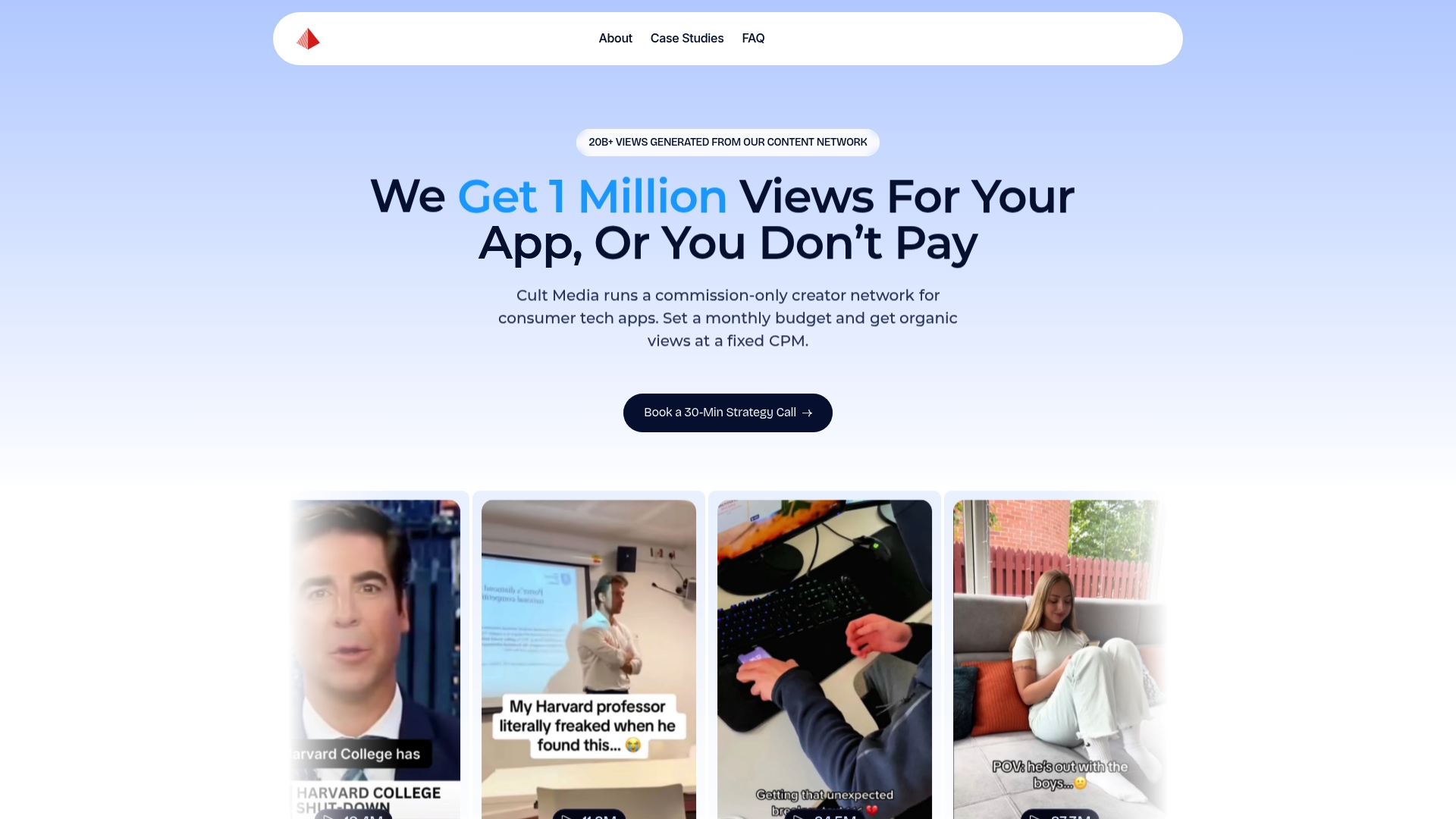
For consumer app brands, that means a creator network already trained on placement and wording standards, guaranteed view delivery tied to a fixed CPM, and campaign monitoring that catches a missing disclosure before it becomes an enforcement problem instead of after. Creators seeking legal advice on a specific situation should still consult qualified counsel; this article explains the framework, not a substitute for legal review of your individual case. If you're a growth marketer or founder ready to launch a campaign built around both performance and disclosure discipline, see how the guaranteed-view model works and start scoping your next campaign.
Sources
Every rule in this piece traces back to three FTC documents, not industry blog consensus. The Endorsement Guides FAQ answers the specific questions creators ask most. The Disclosures 101 brochure translates the legal standard into plain-language examples built for social platforms. CFR Part 255 is the underlying regulatory text the other two interpret.
Cult Media applies this same framework operationally across the creator campaigns it manages for consumer app clients:
- FTC's Endorsement Guides: What People Are Asking | Federal Trade Commission
- PART 255 — Guides Concerning Use of Endorsements and Testimonials in Advertising
FAQ
Is It Illegal for Influencers Not to Disclose Ads?
Yes. Failing to disclose a material connection when an audience wouldn't otherwise understand it violates FTC rules and can lead to civil penalties for both the influencer and the brand involved.
What Are the FTC Guidelines for Instagram Influencers?
Disclosures must appear with the endorsement itself, in plain language like "#ad" or "Sponsored," visible without extra taps, and repeated in Stories and Reels rather than relying only on a bio statement or platform tag.
How Do I Report an Influencer to the FTC?
Consumers can file a complaint through the FTC's official complaint system, which the agency uses alongside its own monitoring to identify patterns of noncompliant endorsement practices.
Do I Need to Disclose Free Products, Not Just Paid Deals?
Yes. FTC guidance treats anything of value, including free or discounted products, as a material connection requiring the same disclosure as a cash payment.
Does a Platform's Paid Partnership Tag Count As Enough Disclosure?
Not always. Platform tools vary in size, contrast, and display duration, so adding your own plain-language text alongside the tag is the safer standard to meet.