Gaming streamers, fitness coaches, personal finance creators, productivity and study influencers, lifestyle micro-creators, creator-tech reviewers, and food content creators represent the strongest starting points for app influencer campaigns. Each niche maps to a specific app category and conversion mechanic, so the right test order is niche-first and platform-second: match the creator's audience to your app's core use case, then pick the platform that fits their content format. From there, measurement determines everything, since installs alone won't tell you if the campaign is working.
TL;DR:
- Niche influencers with aligned audience intent, like gaming or personal finance creators, outperform broad audiences in app conversions, especially when targeting high-interest groups.
- Micro-influencers with 5,000 to 50,000 followers often deliver the best balance of trust and reach, particularly through multi-post campaigns and repeated messaging.
- Match influencer content platform and format to niche strengths, with TikTok and Reels for discovery, and YouTube or Twitch for in-depth demonstrations of app functionality.
- Carefully vet creators beyond follower counts by analyzing engagement, past sponsored content authenticity, and comfort with disclosure rules before investing.
- Using verified performance-based pricing and scaling proven creator content into paid channels significantly improves ROI and long-term app growth.
Table of Contents
- Top Influencer Niches for Apps and Why They Convert
- How to Choose the Best Influencer Niche for Your App
- Influencer Tiers and Deal Structures for App Growth
- Platform and Creative Formats That Convert for Apps
- Measuring Influencer Performance: Installs, Brandformance, and Attribution
- Compliance and Disclosure: FTC Rules for Creator Posts
- Practitioner Playbook: A 90-Day Test-and-Scale Sequence
- Impact of App Type on Influencer Niche Selection
- Strategies for Identifying and Vetting Influencers for Apps
- Case Studies in Influencer Niche Campaigns for Apps
- Emerging Influencer Categories Worth Watching
- When Niche Influencer Campaigns Beat Broad Paid Acquisition
- How Cult Media Helps Apps Scale With Creator-Led Growth
- Sources
- FAQ
Top Influencer Niches for Apps and Why They Convert
Choosing an influencer niche isn't about follower count or content quality alone. It's about whether the creator's audience already wants what your app does. The niches below convert consistently for app marketers because the audience intent lines up with the product, not just the demographic.
Gaming creators work best for mobile games and social or competitive apps. Streamers on Twitch and YouTube gaming channels build trust through live gameplay, which makes demo-driven content and event-tied calls to action (tournament launches, limited-time modes) especially effective. Mobile gaming remains one of the heaviest categories for influencer investment, with YouTube creators and mid-tier partners driving a large share of installs, and casual games increasingly recruiting lifestyle creators to widen reach beyond core gamers, according to industry analysis of gaming influencer trends.
Fitness and wellness creators fit habit-building apps, training programs, and wellness trackers. Coaches and niche fitness creators (runners, powerlifters, yoga instructors) bring built-in credibility, and before/after framing paired with routine integrations ("here's how I use this app during my morning workout") tends to outperform generic testimonials.
Personal finance creators are the right fit for budgeting, investing, and crypto apps. Their audiences are actively researching money decisions, which makes tutorial-style content and "how I saved" narratives convert better than polished ad reads.
Productivity and education creators, including study-with-me channels and career-development influencers, suit habit apps, spaced-repetition tools, and B2C productivity products. Long-form demos and day-in-the-life content work because these audiences want to see the tool in actual use, not just hear a pitch.
Lifestyle and entertainment micro-creators fit casual, social, and habit-forming apps well. Their strength is context: showing your app inside an ordinary daily routine, rather than pitching it as a standalone feature, builds the kind of familiarity that drives repeat opens.
Creator tech and photo/video influencers are the natural match for camera, editing, and creator-tool apps. This audience already evaluates tools for a living, so before/after UGC and direct feature demos land better than lifestyle framing.
Food and beverage creators suit food-ordering and recipe apps. Cook-along formats paired with a clear link-in-bio funnel shorten the path from watching to downloading.
Niche hobby communities, such as collectors, fantasy sports fans, or fandom-specific creators, often convert at a rate that outpaces their reach. A creator with 8,000 followers in a tight hobby niche can outperform a general lifestyle creator with ten times the audience, because nearly everyone watching is already the target user.
- Gaming: streamers and YouTube gaming creators, best for games and social/competitive apps.
- Fitness and wellness: coaches and niche fitness creators, best for habit and training apps.
- Personal finance: budgeting, investing, and crypto creators, best for finance apps.
- Productivity and education: study and career creators, best for habit and B2C productivity apps.
- Lifestyle and entertainment: micro-creators, best for casual and social apps.
- Creator tech and photo/video: camera and editing influencers, best for creative tools.
- Food and beverage: recipe creators, best for food-ordering and recipe apps.
How to Choose the Best Influencer Niche for Your App
Picking a niche starts with where your audience already spends time, not with which creators have the biggest following. Run this framework before committing budget to any category.
- Audience overlap: Identify the subreddits, hashtags, and creator communities your target user already follows.
- Intent match: Check whether that audience is actively searching for solutions like yours, visible in comments, tutorial requests, or recurring questions.
- LTV and monetization fit: Prioritize niches where the audience has shown willingness to pay, since that behavior tends to carry over to your app's conversion funnel.
- Competition signal: Look at category saturation before committing. Games, for instance, show far higher odds of clearing meaningful monthly revenue than saturated categories like business apps, according to an analysis of iOS app category performance, which found Games at a 15.19% chance of reaching an estimated $1,000 monthly revenue milestone compared with 0.86% for Business apps.
- Wedge check: If the category is crowded, confirm you have a genuine differentiator before testing there.
Run each candidate niche through five binary questions: Does the audience already discuss problems your app solves? Do creators in this niche demonstrate products on camera regularly? Is there evidence of purchase intent (affiliate links, paid tools, course sales) in their content? Is the category free of extreme saturation? Can you find at least three creators here within your budget? A "no" on more than one question means the niche needs more validation before you commit spend.
Pro Tip: Screen niches using existing category data before outreach. It costs nothing to check saturation and demand signals, and it saves weeks of wasted creator conversations.
Influencer Tiers and Deal Structures for App Growth
Tier selection determines both cost and risk profile, and app marketers often default to macro-influencers when a mix of smaller tiers would perform better.
- Nano (1,000 to 5,000 followers): highest engagement rates, lowest cost, best for validating a niche and hook before scaling.
- Micro (5,000 to 50,000 followers): the sweet spot for most app campaigns, combining reach with audience trust; micro-influencer campaigns with high-intent audiences have outperformed larger creators for niche apps when paired with multi-post deals.
- Mid-tier (50,000 to 200,000 followers): useful once a hook is validated and you need broader distribution without full macro pricing.
- Macro (200,000+ followers): best reserved for brand awareness pushes once your funnel and creative are already proven.
Deal structures should match the risk you're willing to carry. Flat fees work for testing new creators with unproven conversion history. CPI or CPA deals shift risk to performance but require reliable attribution. Guaranteed-view CPMs work well when you need predictable delivery volume. Affiliate or revenue-share arrangements suit creators willing to bet on long-term payout over upfront cash.
Negotiate multi-video deals over one-off posts, since repetition builds familiarity with the audience. Set aside a small test budget for unproven creators before committing to bigger contracts, and tie bonus payouts to retention metrics rather than install counts alone, which discourages creators from chasing vanity numbers. When a creator outperforms expectations, move quickly to convert them into an ongoing partner instead of renegotiating from scratch each time. Compare CPM and CPI cost structures directly before locking in a model.

Platform and Creative Formats That Convert for Apps
Platform choice should follow the content format your niche naturally produces, not the other way around.
TikTok and Instagram Reels work best for cold discovery, where short, high-energy hooks pull in viewers who have never heard of your app. YouTube suits tutorials and deeper reviews, giving finance, productivity, and creator-tech niches room to explain functionality. Twitch and YouTube live streams drive strong conversion for gaming apps because viewers watch the product in real time and can act on impulse. Instagram also remains useful for lifestyle integrations and Stories links, which shorten the tap-to-install path.
The creative patterns that consistently convert include before/after demonstrations, problem-to-solution walkthroughs, founder-story videos, tutorials, and comment-to-DM funnels that turn engagement into a direct conversation.
- Whitelisting: running top-performing creator content through paid ad accounts extends its reach beyond organic followers.
- Partnership ads: letting the creator's handle appear on the ad builds trust that a brand account alone can't replicate.
- Brand-owned creator channels: co-branded content pages combine creator credibility with brand control over publishing cadence.
Before briefing any creator, confirm the hook lands in the first three seconds, the CTA is spoken and shown, pacing matches the platform norm, the caption reinforces the hook, and disclosure language is visible without being buried. For platform-specific tactics beyond the majors, Snapchat-focused influencer strategies are worth testing for apps with a younger user base.
Pro Tip: Brief creators on the outcome you want, not the exact script. Creators who write in their own voice consistently outperform those reading brand copy.
Measuring Influencer Performance: Installs, Brandformance, and Attribution
Install counts alone overstate or understate a campaign's real impact, which is why brandformance measurement matters. Track installs, cost per install, Day 1 and Day 7 retention, lifetime value, return on ad spend, and organic lift as a full set, not in isolation.
The brandformance ratio compares campaign-attributed installs against your organic install baseline over the same window. Measuring both direct installs and organic lift over a two to three-month period captures the downstream effect of creator content, since many viewers search for the app later rather than clicking a link immediately.
Attribution tools include mobile measurement partners, deep links, and unique promo codes, each with limitations. View-through attribution can overcredit a campaign when a viewer would have downloaded anyway, so treat those numbers as directional rather than exact.
- UTM parameters and deep links on every creator post to trace direct installs.
- In-app event tracking to connect installs to actual product usage, not just downloads.
- Cohort retention tracking comparing influencer-driven users against organic users over the same timeframe.
- Baseline organic comparison run before and during the campaign to isolate lift.
A practical step-by-step install tracking guide walks through setting up this measurement stack before a campaign launches, which avoids the common mistake of trying to reconstruct attribution after the fact.
Compliance and Disclosure: FTC Rules for Creator Posts
Every creator post involving payment, free product, or any other material connection needs a clear, visible disclosure. FTC guidance on influencer disclosures recommends simple language like "#ad" or "sponsored" placed inside the endorsement itself, not buried in a bio or a long string of hashtags.
Video content needs both visible on-screen text and a spoken mention, since viewers often skip captions. Livestreams need repeated disclosure throughout, not just at the start, because viewers join mid-stream.
- Visible text disclosure placed early in the video, not just in the caption.
- Spoken disclosure during the first several seconds of any video or livestream.
- Repeated disclosure during longer livestreams, at reasonable intervals.
- Platform disclosure tools used as a supplement, never a replacement, since built-in labels are frequently missed by viewers.
Audit creator posts after they go live, not just before, since edits and platform bugs can strip disclosures. A deeper FTC compliance checklist for influencer campaigns covers edge cases like affiliate links and gifted products.
Practitioner Playbook: A 90-Day Test-and-Scale Sequence
A structured 90-day window gives most app campaigns enough time to validate a niche and scale what works without overcommitting budget upfront.
Days 0 to 14 focus on discovery and outreach to niche micro-influencers, providing product access and a handful of creative prompts rather than rigid scripts.
Days 15 to 45 run multi-post tests across several creators simultaneously, tracking cost per install and early retention while collecting direct feedback on friction points in the onboarding flow.
Days 46 to 90 shift to scaling: whitelist the highest-performing creator content into paid distribution, negotiate guaranteed-view campaigns with proven creators, and convert the strongest performers into ongoing partners rather than one-off contracts. This staged approach mirrors a documented sequence for structuring high-ROI creator partnerships, moving from discovery to paid testing to whitelisting to guaranteed-view scaling.
Tie every stage to a checklist: creative performance data feeds the next round of creator selection, and retention cohorts, not just install volume, decide which creators get renewed.
Impact of App Type on Influencer Niche Selection
Free apps and paid apps call for different niche strategies because the conversion event is different. A free app with in-app purchases benefits from broad-reach niches like lifestyle and entertainment, since the goal is volume of downloads followed by in-app monetization. A paid, one-time-purchase app needs a narrower, higher-intent niche, since the creator's audience has to be convinced to pay before they even open the product.
Subscription apps sit in between. They need creators whose audience already pays for similar tools, which is why finance, productivity, and fitness creators tend to outperform general lifestyle creators for subscription products: their followers already have a habit of paying monthly for value.
One-time purchase apps, especially utility or creative tools, do better with creator-tech and photo/video niches, where the audience evaluates tools on functionality rather than lifestyle appeal. A feature demo that shows exactly what the app does before asking for payment matches how that audience already makes buying decisions.
Free-to-play games differ again. The influencer's job isn't to drive a purchase decision at all, just an install, which makes broad gaming and even lifestyle crossover creators viable, since the monetization happens later inside the app itself through ads or optional purchases.
Matching niche to app type before creator outreach avoids the common mistake of running a subscription-app campaign through a broad-reach creator whose audience never intended to pay for anything.
Strategies for Identifying and Vetting Influencers for Apps
Finding the right creator starts with searching hashtags, niche-specific Discord and subreddit communities, and app store review sections where users already mention similar products by name. Creators who actively engage in these spaces, rather than simply posting about them, tend to have audiences that trust their recommendations.
Vetting comes next, and it should go beyond follower count. Check engagement rate relative to audience size, since a smaller account with consistent comments often outperforms a larger one with passive likes. Review the creator's past sponsored content for authenticity: do they genuinely use products they promote, or do posts read as generic ad copy.
Request analytics screenshots directly from the creator rather than relying on public follower counts, since public numbers say nothing about actual reach or audience demographics. Cross-check their audience against your target persona using the platform's own audience insights when available.
Run a small paid test before committing to a larger contract. A single sponsored post reveals more about actual conversion than any amount of profile review. Watch for red flags like sudden follower spikes, inconsistent posting history, or engagement that looks disproportionately high relative to comment quality, since these often indicate purchased followers or engagement pods.
Finally, confirm the creator is comfortable with disclosure requirements before signing anything, since compliance issues discovered after a campaign launches are far harder to fix than ones caught during vetting.
Case Studies in Influencer Niche Campaigns for Apps
Documented campaign patterns show how niche alignment drives results across different app categories. One playbook detailing the growth of an AI app from a small starting revenue to a much larger monthly recurring revenue figure attributes the jump largely to micro-influencer multi-post deals and whitelisting, where creators with smaller, high-intent audiences consistently outperformed larger general-interest accounts.
Gaming apps have shown a similar pattern at scale. Mobile gaming companies continue investing heavily in influencer partnerships, with long-term creator relationships and creator-led channels functioning as more durable growth levers than one-off sponsored posts, according to industry trend analysis.
The common thread across these examples is repetition and specificity. Campaigns that ran the same creator across multiple videos, refining the hook each time, outperformed single-post placements. Campaigns that targeted a specific sub-audience, rather than a broad category, converted at a higher rate even with a smaller total reach.
The lesson for app marketers testing niches for the first time: expect the first post from any new creator to underperform relative to their third or fourth, since audiences respond better to familiar faces repeating a message than to a single unfamiliar pitch.
Emerging Influencer Categories Worth Watching
A few niche categories are becoming more relevant to app marketers as the creator economy matures. Tech reviewers who focus specifically on app discovery, rather than general gadget reviews, have built audiences that actively seek out new apps to try, making them a natural fit for early-stage launches.
App enthusiast communities, distinct from general tech audiences, follow creators who post regular "apps I'm using this month" content. These audiences convert well for productivity and lifestyle apps because the entire premise of the content is trying new tools.
Mobile gamers and console gamers, while often grouped together, behave differently as audiences. Mobile gaming creators tend to have shorter-form, high-frequency content and audiences accustomed to quick app switching, while console gaming creators skew toward longer-form reviews and audiences less likely to download mobile titles casually. Matching a mobile game campaign to a mobile-first gaming creator, rather than a console-focused one, tends to produce better install rates.
Category-level market data can help prioritize where to look first. Broader market outlook data across categories like AI, beauty, and games gives a sense of where creator and consumer attention is currently concentrated, which is useful context before narrowing into a specific sub-niche.
When Niche Influencer Campaigns Beat Broad Paid Acquisition
Niche creators consistently outperform broad paid acquisition when an app serves a specific recurring habit or an intense, well-defined interest. A budgeting app promoted by a personal finance creator reaches people already primed to act, while the same budget spent on generic paid social reaches mostly indifferent viewers.
The bigger advantage shows up over time. Long-term creator partnerships tend to lower acquisition costs and improve retention compared with one-off paid campaigns, because the audience trusts a familiar voice more with each repeated mention. Broad paid acquisition can fill a funnel quickly, but it rarely builds the kind of trust that keeps a user opening the app on day thirty.
The practical advice holds regardless of category: start with a small test, measure retention alongside installs, and reinvest in the creators who move both numbers, not just the ones who move installs.
— Jax
How Cult Media Helps Apps Scale With Creator-Led Growth
Testing niches manually, one creator at a time, takes months most app teams don't have. A commission-only creator network built specifically for consumer tech apps pairs niche creator discovery with guaranteed-view campaigns priced on verified performance rather than upfront retainers.
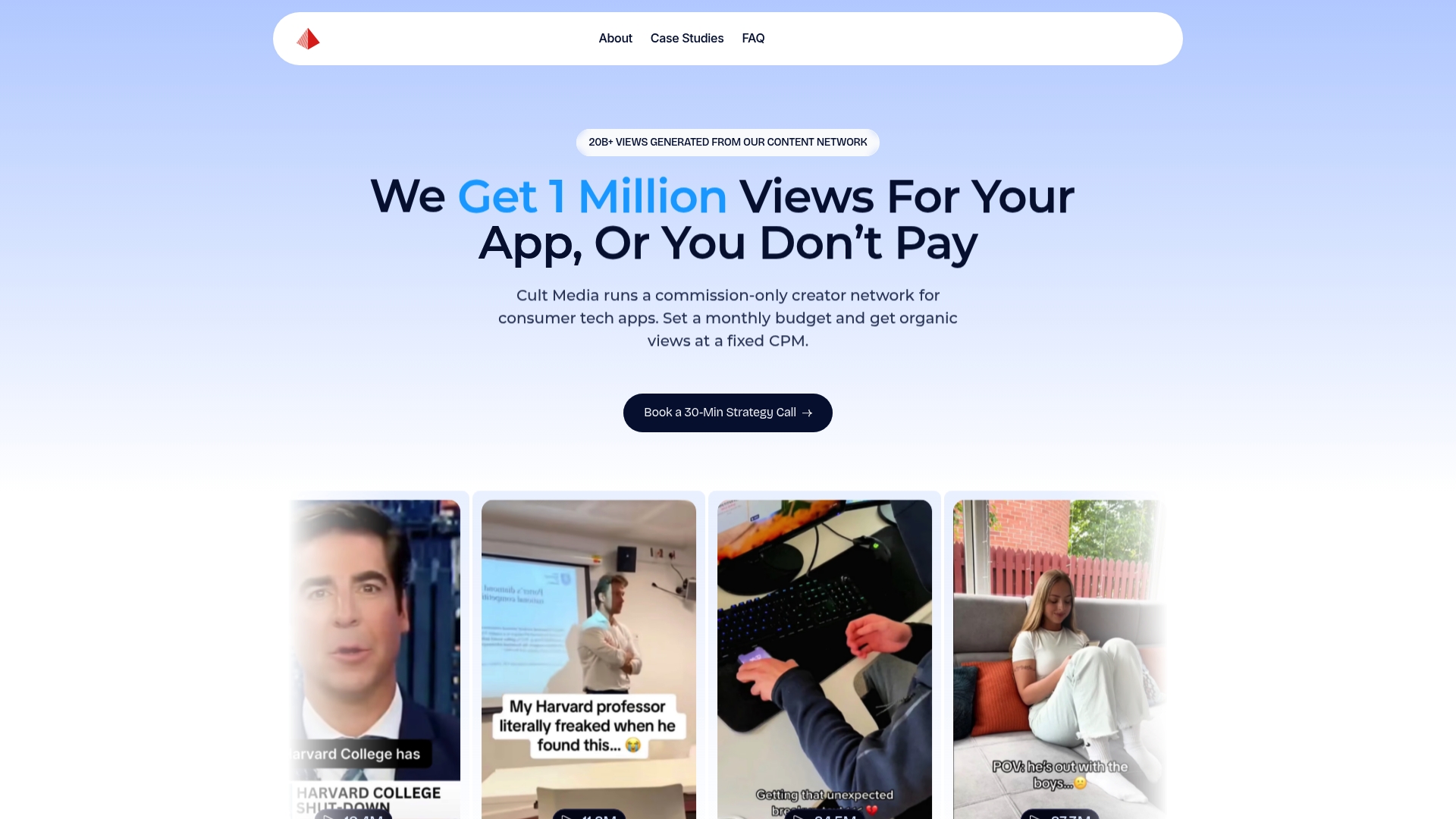
- Verified view pricing: you pay based on confirmed campaign performance, not projected reach.
- End-to-end creator management: sourcing, vetting, and briefing niche creators without building that process internally.
- Paid distribution integration: top-performing organic content gets whitelisted into paid channels for scale.
The 0G Labs content engine case study and the broader creator-led growth case studies show how this model plays out across different app categories. Visit the commission-only creator network page to see current campaign structures and get a sense of fit for your app.
Sources
This article draws on the FTC's disclosure guidance for influencers, Business of Apps research on brandformance measurement, the Stormy micro-influencer playbook, and category performance data from GetAppNiche. For app teams evaluating whether influencer marketing is the right channel at all, Save Your App offers a diagnostic starting point, and TikTok creative hook testing resources support the format-testing work covered above.
FAQ
What are the top influencer niches for apps?
The strongest niches for app marketers are gaming, fitness and wellness, personal finance, productivity and education, lifestyle and entertainment, creator tech, and food and beverage. Each maps to a specific app category, so the right niche depends on matching audience intent to what the app actually does.
Will AI replace influencers in app marketing?
AI tools are increasingly used for content editing, audience analysis, and campaign measurement, but the trust and authenticity a human creator brings to an endorsement remain central to why influencer marketing works. Nothing in current industry data suggests creator-led endorsement is being replaced by automated content.
What are the best apps for influencers to use for content creation?
This depends on the creator's niche and platform, ranging from editing tools for creator-tech influencers to analytics dashboards for tracking campaign performance. A comparison of influencer analytics tools covers options useful for both creators and the brands working with them.
What is a niche for influencers?
A niche is a specific content category and audience interest, such as personal finance, fitness, or gaming, that a creator consistently produces content around. For app marketers, the niche matters because it determines whether the creator's audience already has intent to use a product like the one being promoted.
How do I know if my app fits a niche influencer strategy?
If your app serves a specific recurring habit or a well-defined interest group, niche influencer campaigns tend to outperform broad paid acquisition on both cost and retention. Apps with broader, less specific use cases may need to test multiple niches before finding one with strong intent alignment.
Recommended
- 9 Part Influencer Case Study Template for Creators & Apps With KPIs
- 2026 App Install Conversion Rate Benchmarks and Playbook for App Teams
- TikTok App Marketing: Performance-Based Creator Playbook - Scale Your Consumer App By Unlocking The TikTok & Instagram Systems Behind +20 Billion Views
- 90-Day Launch Plan for App Marketers: Creator Campaigns With Guaranteed Views