
This page gives you a ready-to-copy 9-part influencer case study template, a step-by-step fill guide with real phrasing examples, KPI formulas, and file-format recommendations for Canva, Google Slides, and Word. Copy the structure, plug in your numbers, and you have a campaign-ready asset built to move a brand from "interesting" to "let's talk."
TL;DR:
- Campaigns should include verified organic views separately from paid efforts to ensure accurate attribution and credibility.
- Use clear baseline, timeframe, and measurement methods for each KPI to build trust and prevent skepticism.
- Report on micro- versus macro-influencer performance explicitly as results vary significantly by creator tier and product type.
- Incorporate visual proof such as analytics screenshots and content thumbnails early in the case study for quick skimming.
- Send full case studies only after genuine brand interest, placing multiple calls-to-action at the top, middle, and end to maximize engagement.
Table of Contents
- What Is an Influencer Case Study, and Who Needs One?
- The 9-Part Influencer Case Study Template You Can Copy
- How to Fill Each Section With Real Phrasing
- Which Metrics Actually Prove the Campaign Worked?
- Making the Case Study Look as Strong as the Numbers
- When to Send It and Where to Put the CTA
- Why Verified Views Change What Belongs in an App Case Study
- A Quick Sanity Check Before You Send It
- Turn Your Next Campaign Into Proof, Not a Pitch
- Sources
- FAQ
What Is an Influencer Case Study, and Who Needs One?
An influencer case study is a short, evidence-backed document that proves a specific campaign produced measurable results for a specific brand. Its job is narrow: reduce the perceived risk of hiring you or working with your creator network by showing what already happened, not what might happen. That distinction separates it from a media kit, which sells potential (follower count, audience demographics, past collaborations) rather than proof.
Send a media kit during initial outreach, when a brand doesn't know you yet. Send a case study once you're in a real conversation, especially with a mid-size or enterprise brand that needs to justify budget internally. According to industry analysis of influencer marketing effectiveness, results depend heavily on post format, follower tier, and platform, which is exactly why a generic pitch deck rarely closes deals that a documented result does.
Case studies work best for:
- Mid-tier and macro creators pitching brand deals directly
- Agencies and creator networks pitching multiple brands at once
- Any campaign with a specific, measurable win, not just "good engagement"
The 9-Part Influencer Case Study Template You Can Copy
A high-converting case study follows a repeatable nine-part structure. Copy this into Canva, Google Slides, or Word and fill in the brackets.
- Headline — State the outcome and timeframe. Example: "How [Brand] Generated 4,200 App Installs in 21 Days With 3 TikTok Creators."
- Client snapshot — A boxed summary readers scan in five seconds.
- Problem — The specific brand challenge before you got involved.
- Goals and KPIs — What success looked like, defined before launch.
- Strategy — Why you chose this creator mix, platform, and content angle.
- Execution — What actually got made and posted.
- Tracking — How you measured it (tool, UTM setup, attribution window).
- Results — The numbers, with baseline and timeframe attached.
- Learnings and CTA — What you'd repeat, plus a next step for the reader.
The snapshot box (item 2) should include four fields at minimum:
- Industry (e.g., "consumer fitness app")
- Audience (e.g., "US-based, 18 to 34, iOS-first")
- Primary channel (e.g., "TikTok and Instagram Reels")
- Constraint (e.g., "3-week flight, whitelisting included")
Canva's own marketing case study framework recommends this same context-challenge-solution-results skeleton, and for good reason: it's skimmable in under a minute, which matters when a busy marketing director is the one deciding whether to keep reading.
How to Fill Each Section With Real Phrasing
Blank templates are easy to admire and hard to finish. Here's exact phrasing you can adapt field by field.
- Headline: Lead with the number and the timeframe, never the platform. "3.1M organic views and 18,400 landing page clicks in 30 days" beats "Our TikTok Campaign Success Story" every time.
- Problem: Name the specific gap. "The brand's paid CAC had climbed to $34 with flat conversion, and prior UGC tests underperformed benchmark engagement." Specificity here is what makes the results later feel earned, not lucky.
- Goals: List each KPI with its baseline and target side by side. "Baseline: 1.2% click-through rate. Target: 2.5% within 4 weeks."
- Execution: Document creators, deliverables, and usage rights in one line, something like "4 TikTok creators produced 10 short-form videos and a landing page UTM flow; 3-week flight; whitelisting for ads included." Attach a screenshot of the content calendar or a grid of thumbnails if you have one.
- Results: Always state baseline, timeframe, and measurement method together. Instagram, InfluencerDB's lead generation framework makes this point directly: results without a stated baseline and attribution method invite skepticism, and skepticism kills momentum in a sales conversation.
If the brand requires anonymity, replace the name with a category descriptor ("a mid-size meal-kit subscription app") and keep every number intact. Anonymized numbers still close deals; anonymized results with vague numbers don't.
Pro Tip: Keep one sentence per bullet in the execution and results sections. A recruiter or brand manager skims first and reads second, so density beats detail on the first pass.
Which Metrics Actually Prove the Campaign Worked?
Pick one or two primary KPIs tied to the campaign's actual goal, then support them with relevant secondary metrics to provide context. Trying to report everything dilutes the one number that mattered.
- Awareness campaigns: primary KPI is views or reach; support with engagement rate
- Lead generation: primary KPI is cost per lead (CPA); support with click-through rate
- App installs or sales: primary KPI is cost per install or conversion rate; support with landing page conversion rate
The formulas worth memorizing:
- Engagement rate = (likes + comments + shares) ÷ followers × 100
- CPM = (total spend ÷ total impressions) × 1,000
- CPA = total spend ÷ number of conversions
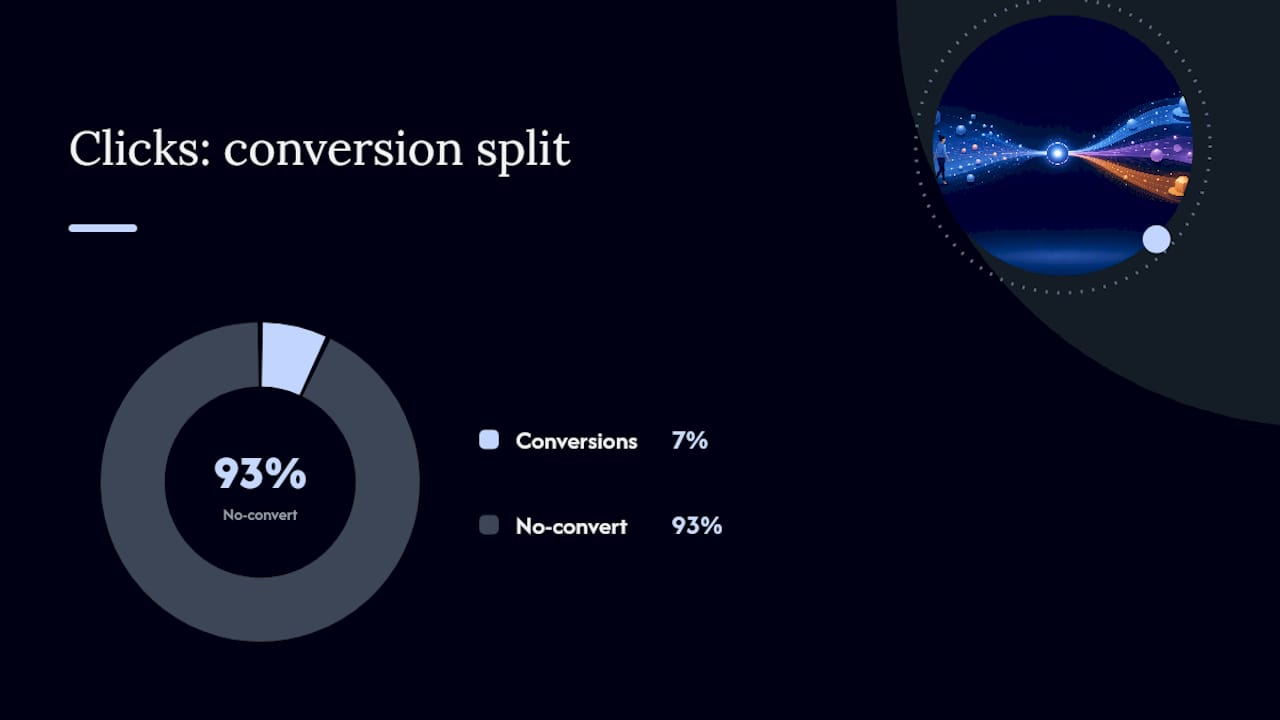
- Conversion rate = conversions ÷ total clicks × 100
A worked example: a campaign spending $8,000 that drives 3,200 landing page clicks and 224 conversions produces a conversion rate of 7% and a CPA of $35.71. Report both numbers together, not one without the other, since either figure alone can mislead.
Benchmarking matters here too. Market data from Axis Intelligence shows micro-influencers frequently deliver stronger engagement and better ROI than mega-tier creators, which is worth citing if your case study features a smaller creator outperforming expectations. The meta-analysis behind influencer marketing effectiveness also confirms that platform and product category moderate results significantly, so always note both when presenting a number, and disclose sample size (three creators over three weeks is a real result, but it's a different confidence level than thirty creators over three months).
Making the Case Study Look as Strong as the Numbers
A case study with great numbers and poor layout still gets skimmed and ignored. Put the hero snapshot and two or three headline stats above the fold, before any explanation of strategy. A brand manager should understand the win before they understand how you achieved it.
Screenshots to capture:
- Analytics dashboard showing the view or engagement spike, cropped tight to the relevant date range
- One or two actual UGC posts or video thumbnails, annotated with the metric they drove
- Landing page conversion data, blurred for any sensitive account details
Canva and Google Slides both export clean PDFs at a manageable file size, which matters when you're emailing this as an attachment rather than a link. Word documents work too, but convert to PDF before sending; formatting shifts are a real problem across email clients. For guidance on which visuals read as credible rather than staged, Canva's own case study resource is worth a look, and Cult Media's guide to social proof content covers annotation and cropping specifics for creator-driven visuals.
When to Send It and Where to Put the CTA
Send the full case study once a brand has replied with genuine interest, not on cold outreach. On cold outreach, mention the result in one line and offer the full document "on request," which filters for real intent.
Placing the CTA in three spots outperforms placing it once:
- Top: a one-line summary CTA under the headline ("Want results like this? Let's talk.")
- Middle: a soft CTA after the results section ("See the full measurement breakdown")
- End: a direct ask ("Book a 15-minute call to discuss your next campaign")
If an NDA restricts brand naming, anonymize the client but keep every metric visible, and note "brand name withheld per NDA" rather than leaving it unexplained.
Why Verified Views Change What Belongs in an App Case Study
App marketing case studies live or die on attribution credibility. A last-click conversion number looks impressive until a brand's growth marketer asks how much of it was incremental. That's the question Cult Media's model is built around.
Because Cult Media runs commission-only, view-guarantee campaigns, every case study built on that data starts from verified organic views rather than estimated impressions, which gives app founders a cleaner baseline to report against paid acquisition benchmarks. That distinction matters more in consumer tech than in most verticals, since paid CAC comparisons are the actual currency of the pitch.
A few things worth building into any app-focused case study:
- Report verified views separately from paid amplification, never blended
- Note creator tier tradeoffs explicitly, since micro versus macro creator performance varies by product category
- Reference organic versus paid view mechanics when a brand asks how the number was calculated
A Quick Sanity Check Before You Send It
Before sending any case study, ask three things: does it answer the buyer's actual question, does every number carry a baseline and timeframe, and would a skeptical growth marketer believe the attribution method? If any answer is no, fix that before polishing the design. Use a real screenshot wherever you can, and never bury the CTA at the bottom where a skimmer won't see it.
— Jax
Turn Your Next Campaign Into Proof, Not a Pitch
Cult Media exists for exactly the gap this template is built to close: consumer app companies that need verified, view-driven results instead of a retainer bet on vague "brand awareness." Because Cult Media only gets paid on verified organic views delivered by its creator network, every campaign it runs produces the kind of clean, attribution-backed data this template is designed to showcase, no guessing about what was incremental and what wasn't.
If you're a founder or growth marketer weighing whether creator-driven user acquisition can actually move your install numbers, the fastest way to find out is to see the model in action. Visit the Cult Media guaranteed-view platform to book a walkthrough of how a performance-based campaign gets structured, and ask for an example case study built from a real app launch.
Sources
- Influencer marketing effectiveness: A meta-analytic review — Journal of the Academy of Marketing Science
- Marketing case study: How to create an effective marketing case study — Canva
- Influencer Marketing Statistics 2026: Market Size, ROI & Platform Data — Axis Intelligence
- Lead generation case study: Turn proof into leads — InfluencerDB
FAQ
What Are the 5 Components of a Case Study?
Most frameworks converge on context, challenge, strategy, results, and a call-to-action, though the 9-part template above splits these into finer sections (snapshot, execution, tracking, learnings) for more measurement transparency.
What Are Some Common Influencer Niches?
Beauty, fitness, tech and apps, personal finance, and food are five of the most active niches, each with different benchmark engagement rates and platform preferences.
What Makes a Good Case Study Example?
A strong example states a specific baseline, a measurable result with a timeframe, and the exact tracking method used, rather than a vague claim like "great engagement."
What Is a Good Format for a Case Study?
A one-to-two-page PDF exported from Canva, Google Slides, or Word works best: scannable, easy to attach to email, and small enough to open on mobile without lag.
How Do I Choose Which Campaign to Feature?
Pick the campaign that answers a specific buyer question with a measurable result, not the one with the highest raw engagement or "most likes."
Recommended
- TikTok App Marketing: Performance-Based Creator Playbook - Scale Your Consumer App By Unlocking The TikTok & Instagram Systems Behind +20 Billion Views
- Best Influencer Analytics Tools for Founders & Growth Marketers
- Snapchat Influencer App Marketing: Scale Installs Fast
- YouTube Shorts App Marketing: A Playbook for Growth Teams