YouTube Shorts can be a predictable app-acquisition channel, but only when you pair fast UGC testing with the right paid scale or a guaranteed-view creator campaign. The practical path is simple: validate hooks and formats organically or through Promote, then push proven winners into Video Action Campaigns or App Campaigns, or hand distribution to a commission-only creator network that ties payment to verified views.
TL;DR:
- Testing fast and cheap with Promote or organic posts helps identify high-performing hooks before scaling into performance-driven Google Ads campaigns.
- Short-form creative should focus on the first three to seven seconds with simple, native-style footage and a single clear call to action to maximize retention and conversions.
- View-through metrics and average percentage viewed are better indicators of long-term install potential than raw view counts, especially since Shorts viewers often watch ads longer.
- Building a repeatable Shorts channel involves forming ongoing creator partnerships, testing hybrid organic-to-paid strategies, and using guaranteed-view creator networks tied to verified performance.
- Confirm view verification, reporting frequency, creative rights, and install attribution details before partnering with any creator network to ensure trustworthy and actionable performance data.
Table of Contents
- Why YouTube Shorts App Marketing Matters Now
- Promote or Google Ads: Which Buying Path Fits Your Goal?
- What Creative Actually Converts Viewers Into Installs?
- Which KPIs Prove Shorts Is Driving App Installs?
- How Do You Scale Shorts Into a Repeatable Install Channel?
- What Should You Verify Before Trusting a Creator Network?
- What I've Learned Running Shorts Campaigns for Consumer Apps
- Get Guaranteed-View Shorts Campaigns Without the Retainer Risk
- Sources
- FAQ
Why YouTube Shorts App Marketing Matters Now
Shorts reaches viewers who never subscribe to your channel, and YouTube's indexing pushes strong performers into related long-form recommendations, extending reach well past the initial view. That cross-promotion effect is unique among short-form platforms, and it's a big reason Shorts belongs in a serious user-acquisition mix rather than a side experiment.
Platform mechanics have also caught up. The Promote feature now lets any channel boost a Short directly from YouTube Studio, and Shorts inventory is fully integrated into Google Ads formats built for install goals. YouTube's own case studies show brands like Urban Decay, Samsung, and eBay posting stronger click-through rates and conversion lift when Shorts joined their campaign mix.
What this means for app marketers:
- Shorts inventory now sits inside the same Google Ads console you already use for Search and Display.
- Cross-promotion into long-form recommendations extends the life of a winning Short well past week one.
- Documented CTR and conversion lifts give you a defensible business case when pitching budget internally.
Promote or Google Ads: Which Buying Path Fits Your Goal?
Pick Promote when you want speed and simplicity. Pick Google Ads when you need to optimize for installs. The two tools solve different problems, and confusing them wastes budget.
Promote, managed entirely inside YouTube Studio, gives you an estimated daily view count and basic audience targeting with almost no setup friction. YouTube's own documentation is explicit that promotions launched this way stay siloed in YouTube and never surface inside Google Ads, which means no access to install tracking, bidding by cost-per-install, or audience overlap reporting. It's a fast amplification tool, not a performance marketing system.
Google Ads (Video Action Campaigns and App Campaigns) is where you go once you need install-level optimization. These formats connect to mobile measurement partners and SKAdNetwork, bid toward install or in-app event goals, and let you run structured creative A/B tests at scale.
The decision rule most growth teams should follow:
- Launch a cheap organic test or a small Promote boost to see which hook actually holds attention.
- Pull retention data before you commit real budget to anything.
- Move only the proven winners into Video Action or App Campaigns, where install attribution actually works.
- Keep every losing variant on file. Creative fatigue sets in fast on Shorts, and yesterday's runner-up is often next month's fresh hook.
Pro Tip: Never launch a Video Action Campaign on an unvalidated creative. Promote or organic posting costs a fraction of a Google Ads test and tells you in 48 hours whether a hook is worth scaling.
What Creative Actually Converts Viewers Into Installs?
The first three to seven seconds decide whether a Short survives the scroll. Search Engine Land's analysis of Shorts growth patterns points to retention, not raw views, as the metric that separates ads that work from ads that get skipped. A visual contradiction, a blunt value proposition, or a specific performance claim ("this app cut my grocery bill by 30 dollars a week") earns the next four seconds. A slow logo intro does not.
Format matters as much as the hook. Four structures consistently outperform polished commercials on Shorts:
- Demo loop — the app doing its core job on repeat, no narration required.
- Problem → micro-solution — a relatable friction point resolved in under 10 seconds.
- Before/after — a visible state change that the app caused.
- Micro-tutorial — one feature, explained in one breath.
Low-fidelity, creator-shot footage tends to beat studio production on Shorts specifically because it matches the native feed aesthetic and slips past the ad-blindness that polished spots trigger. Keep the call to action singular: a channel link, a related long-form video, or a product shelf, never all three competing for the same three seconds of attention. For more on structuring these opening beats, see this breakdown of short-form video trends.
Pro Tip: Test five hook variants against the same body footage before you touch the CTA. Hooks drive 80 percent of the variance in Shorts performance; the CTA barely moves the needle if nobody watched past second four.

Which KPIs Prove Shorts Is Driving App Installs?
Views alone tell you almost nothing about install performance. The KPIs that matter are attributed installs, view-through conversions, average percentage viewed (APV), watch-through rate, the ratio of shown-in-feed to actually viewed, and subscriber conversion from the Short itself.
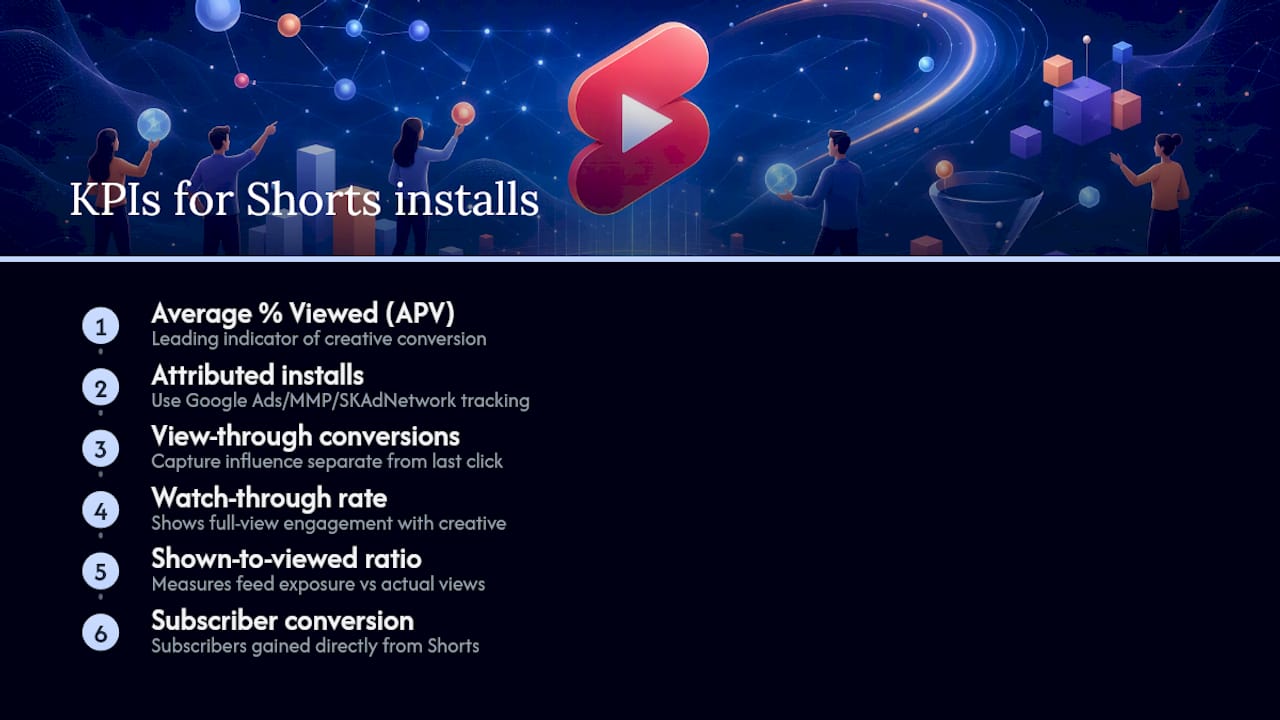
APV deserves special attention. Search Engine Land's Shorts research found that Shorts viewers often watch ads longer than they do on competing short-form platforms, which makes APV a leading indicator of whether a creative will eventually convert, well before install data catches up.
Attribution setup should run through Google Ads install tracking, a mobile measurement partner, or SKAdNetwork depending on platform and privacy constraints, and you should still capture view-through influence separately so upper-funnel Shorts activity gets credit for installs that complete later through Search or direct.
Before scaling spend, set a guardrail cost-per-install ceiling and, where budget allows, run an incremental lift test (a holdout region or audience) to confirm Shorts is adding installs rather than just intercepting demand you'd have captured anyway.
Shorts viewers frequently sit through ads longer than users on rival short-form platforms, according to Search Engine Land's analysis, which is exactly why APV belongs at the top of your dashboard, not buried below install count.
How Do You Scale Shorts Into a Repeatable Install Channel?
One winning Short is a data point. A repeatable channel needs a system, and the best-performing app marketers build that system around three moving parts.
- Favor series-based creator partnerships over one-off briefs; creators who already post high-APV, high-watch-through Shorts on their own channels tend to replicate that performance with branded content, and prior watch-through history is a better filter than follower count.
- Run the organic-to-paid hybrid consistently: test cheap and fast, isolate the winners, then scale them through Video Action Campaigns, App Campaigns, or a larger Promote push, and repurpose the same footage across TikTok and Instagram Reels once it's proven.
- Consider a guaranteed-view, commission-only creator network when you need predictable volume without absorbing the risk of underperforming retainers; payment tied to delivered views keeps the creator's incentives aligned with yours instead of just aligned with posting volume.
Teams that have run this exact hybrid on TikTok report similar patterns, which suggests the workflow isn't platform-specific. Our performance-based creator playbook walks through the mechanics in more depth.
What Should You Verify Before Trusting a Creator Network?
A commission-only structure changes the incentive math in your favor: you pay for delivered, verified views rather than a flat retainer regardless of outcome, which is precisely the model Cult Media runs for consumer app clients across its creator network. That structure matters most for teams that have been burned by CPM buys where impressions arrived but installs didn't follow.
Before signing with any performance-based network, confirm four things:
- View verification — how views are counted and whether third-party platform data backs the reporting.
- Reporting cadence — daily or weekly dashboards versus a single end-of-campaign summary.
- Creative ownership — whether you keep rights to reuse winning UGC across other channels.
- Conversion measurement — whether the network ties into your install attribution stack or only reports top-of-funnel metrics.
Pro Tip: Ask any prospective creator network for a sample reporting dashboard before you sign anything. If they can't show you real view-verification data from a past campaign, that's your answer.
What I've Learned Running Shorts Campaigns for Consumer Apps
The tactical plan is short: test hooks fast and cheap, validate through Promote or organic posting, then scale only the proven creatives through App Campaigns or a guaranteed-view creator program. Everything else is detail.
The biggest pitfall I keep seeing is over-production. Teams spend two weeks polishing a 15-second ad when a creator could've shot five raw variants in an afternoon, and the raw version usually wins. The second pitfall is watching install counts while ignoring APV, which means teams keep scaling creatives that were never going to hold attention long enough to convert. The third is loose attribution: without view-through credit, Shorts gets blamed for "not working" when it was quietly assisting installs that Search or direct traffic ultimately closed.
— Jax
Get Guaranteed-View Shorts Campaigns Without the Retainer Risk
Cult Media runs commission-only creator campaigns built specifically for consumer app growth, so you pay for verified views delivered, not for a creator's time or a flat monthly fee regardless of outcome. That structure removes the guesswork traditional retainers carry: you know your cost per view going in, and the creative team building your UGC already understands what converts on Shorts, TikTok, and Reels for app installs specifically.
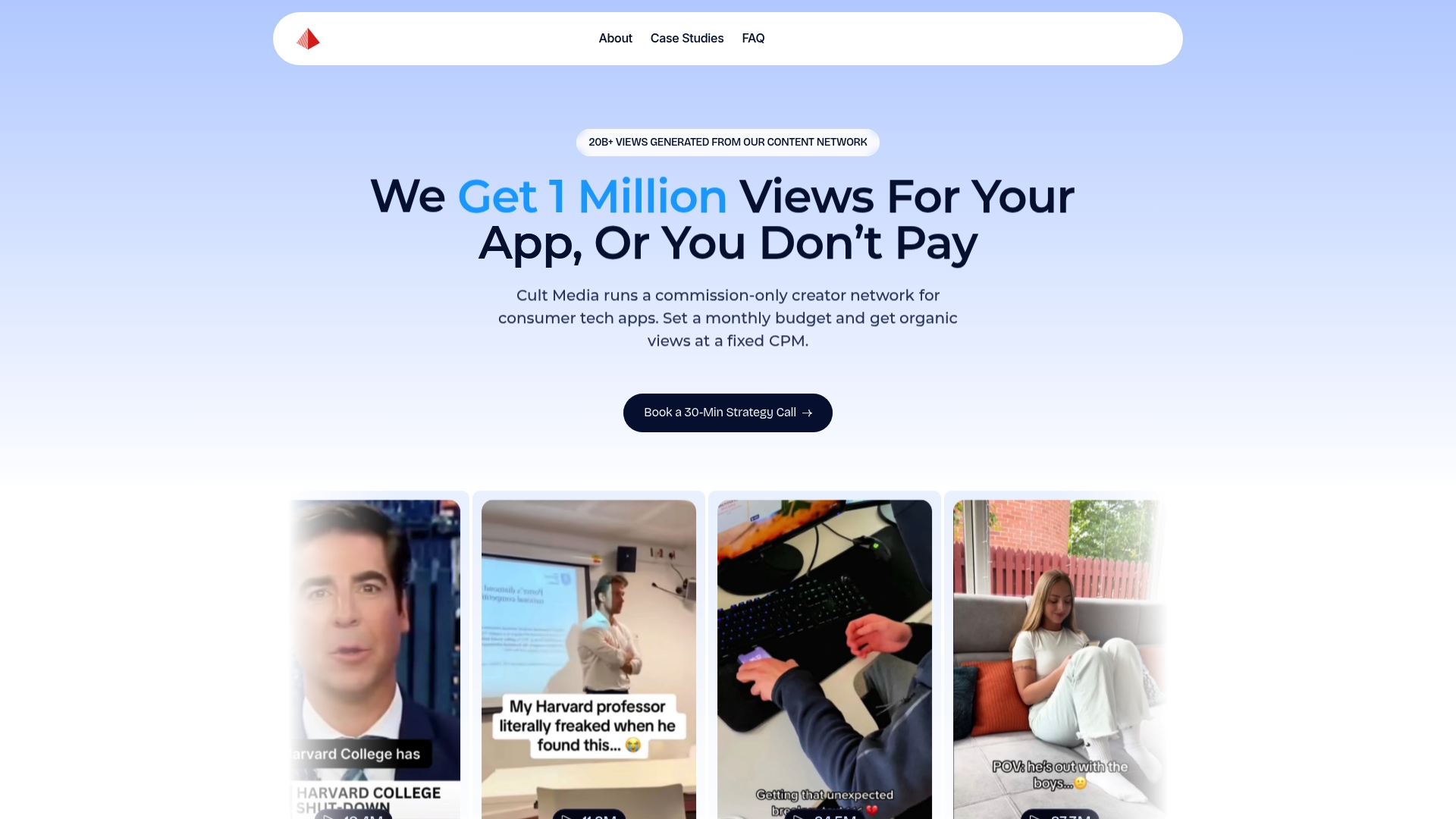
Every campaign runs through Cult Media's creator network with reporting tied to verified delivery, so you can hand off the testing and scaling workflow described above without hiring an in-house production team. If you're ready to turn a validated hook into a repeatable install pipeline, visit Cult Media to see how the guaranteed-view model works for your app category and current budget.
Sources
- YouTube Shorts Ads
- YouTube Lets Channels Pay To Boost Shorts Videos
- How to use YouTube Shorts to drive sustained growth, engagement
- Promote your videos – YouTube Help
FAQ
Can I Promote My YouTube Shorts?
Yes. Any channel can boost a Short directly from YouTube Studio using the Promote feature, which sets an estimated daily view target and basic targeting, though it runs separately from Google Ads and offers no install-level optimization.
What Is the 7-Second Rule on YouTube?
It refers to the idea that viewers decide whether to keep watching within the first seven seconds, which is why Shorts creative should front-load the hook, the value proposition, or the visual surprise rather than easing into the message.
How Much Is Paid for 1,000 Views on YouTube Shorts?
Organic Shorts views generate no direct RPM comparable to long-form ad revenue, and paid costs vary by campaign type, audience, and competition, so there's no fixed rate; a guaranteed-view creator campaign instead sets a fixed cost tied to delivered views rather than an estimated CPM.
How Many Views Do You Need on YouTube Shorts to Make $10,000?
Shorts monetization for creators depends on the YouTube Partner Program's ad-revenue share, not a simple view-to-dollar formula, so the relevant question for app marketers is different: it's how many attributed installs a given view volume produces, which is why APV and view-through conversion matter more than raw view counts.
Should I Use Promote or Google Ads for App Install Campaigns?
Use Promote to validate a creative quickly and cheaply, then move proven winners into Video Action Campaigns or App Campaigns once you need install-level attribution and bidding control that Promote doesn't offer.