Scaling influencer programs requires repeatable systems, measurement infrastructure, and targeted automation, not simply adding more creators to a spreadsheet. The Influencer Marketing Hub found that a significant share of teams manage a small number of influencers because operational complexity, not budget, is the real ceiling. Growth happens in phases: crawl, walk, run, each gated by proof that discovery, measurement, and payments already run without manual firefighting, as guided by best-practice frameworks.
TL;DR:
- Scaling influencer programs depends on automating discovery, outreach, payments, and reporting processes to handle higher volumes efficiently.
- Transition stages should be based on stability in key metrics over three consecutive cycles, not just creator count or a single successful week.
- Prioritize automation of routine workflows like shortlist reruns, templated outreach, contract signing, and real-time dashboards before increasing creator numbers.
- Team structures should evolve from generalists handling all tasks to specialized roles as creator count surpasses 30, with governance controls tightening at higher levels.
- Use performance tracking tools such as UTMs, promo codes, and pixels from the start to ensure accurate attribution and ROAS measurement before scaling efforts.
Table of Contents
- What Are the Core Components of a Scalable Influencer Program?
- When Should You Move From Crawl to Walk to Run?
- Which Workflows Should You Automate First?
- What Measurement Setup Do You Need Before Scaling?
- How Should You Structure Your Team as the Program Grows?
- How Do You Budget and Pay Creators as You Scale?
- What Does a 90-Day Test-and-Scale Sequence Look Like?
- What Most Teams Get Wrong About Scaling
- A Faster Path to Scaling Verified Views
- Sources
- FAQ
What Are the Core Components of a Scalable Influencer Program?
A program that scales rests on six functional pillars, and each one has to work independently before you add volume. Skip one and the whole system buckles under its own weight once you go from 15 creators to 150.
- Discovery and vetting: Use the Three R's — Relevance, Reach, and Resonance — to screen candidates before outreach, checking audience authenticity alongside follower count to filter out inflated engagement.
- Outreach: Templated but personalized messaging that references the creator's actual content, not a generic pitch blasted to a list.
- Contracts: Clear scopes of work, usage rights (organic vs. paid amplification), and click-to-accept templates that cut negotiation cycles from weeks to days.
- Content operations: A tracked pipeline from brief to draft to approval to publish, with deadlines visible to both sides.
- Payments: A compensation structure that matches the campaign goal, whether flat fee, hybrid, or performance-based.
- Reporting: Centralized dashboards that pull performance data without someone manually compiling screenshots.
Vetting deserves extra attention because it's where most fraud slips through. Fake-follower networks and engagement pods can pass a surface-level check, so pairing audience-quality tools with manual spot checks on comment authenticity catches what automated scores miss. Contracts matter just as much: a contract missing usage-rights language is the single most common source of disputes once brands start reusing creator content in paid ads.
When Should You Move From Crawl to Walk to Run?
Scaling in stages prevents the operational collapse that hits programs the moment they outgrow manual processes. Each phase has a creator-count threshold, a staffing expectation, and a performance gate you have to clear before advancing.
- Crawl (1 to 15 creators): One operator runs discovery, outreach, and reporting manually. The goal is proving the offer and creative format work, not efficiency. Document every step as you go, because that documentation becomes your onboarding SOP later.
- Walk (15 to 50 creators): Manual workflows start breaking here, which is exactly why teams that scale influencer marketing effectively automate discovery shortlists and outreach sequencing at this stage rather than hiring a second full-time coordinator.
- Run (50+ creators): Specialist roles emerge, tooling handles payments and reporting automatically, and the team shifts from execution to strategy.
The gate between phases isn't a headcount number alone. It's a three-quarter stability rule: hold cost-per-acquisition or engagement rate steady across three consecutive reporting cycles before adding volume. Move up too early on one good week and you'll scale a fluke, not a system.
Which Workflows Should You Automate First?
Automating the repeatable parts of the program delivers more scale per headcount than hiring another coordinator, and it's the single biggest lever most teams under-use. The trap is trying to automate everything at once instead of sequencing it by where the manual bottleneck actually hurts.
- Discovery shortlist reruns: Save your vetting criteria as a template and rerun it monthly instead of starting from zero.
- Templated outreach: Personalization tokens plus sequenced follow-ups replace one-off DMs.
- Contract click-to-accept: Digital signature flows with pre-approved terms cut turnaround from a week to a day.
- Payments automation: Batch processing tied to deliverable confirmation removes the manual invoice chase.
- Live reporting: Dashboards pulling from UTMs and platform APIs instead of a hand-built spreadsheet updated every Friday.
On the tooling side, connect your influencer platform to your CRM so creator relationships live alongside customer data, not in a separate silo. Affiliate and partner tracking tools should feed the same attribution system you use for paid ads, and your ad platform accounts need to be linked early if you plan to run whitelisted or boosted creator content later.
Pro Tip: Build your onboarding SOP once, in writing, during the crawl phase. A documented onboarding process is what lets you hand new-creator setup to a coordinator instead of doing it yourself at 200 creators.
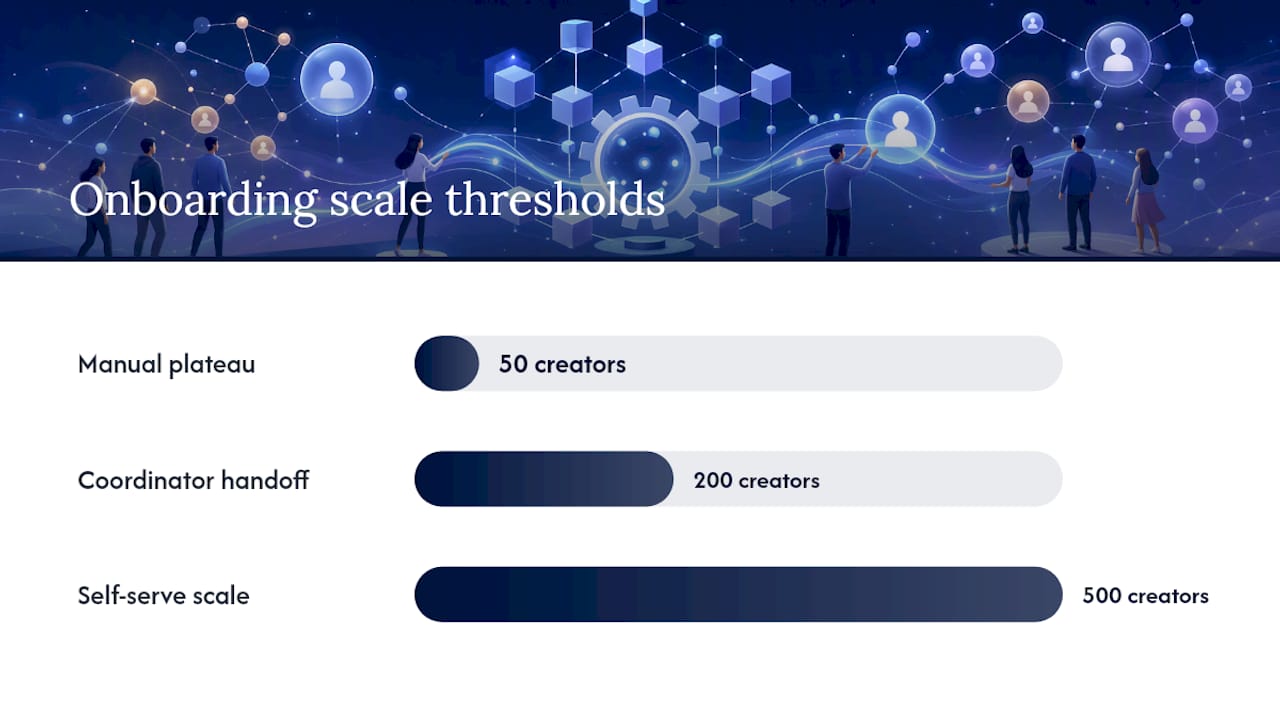
Self-serve onboarding, where creators fill out a form and sign a contract without a human touching every step, is what separates programs that plateau at 50 creators from ones that comfortably run 500.
What Measurement Setup Do You Need Before Scaling?
Instrument every campaign with UTMs, unique promo codes, affiliate links, and pixels before the first post goes live, not after you're wondering why results look inconsistent. Later's playbook treats influencer marketing as a performance channel tied directly to ROAS and customer acquisition cost, and that framing only works if the tracking exists from day one.
- UTM conventions: Standardize a naming structure (creator, platform, campaign) so reporting doesn't require manual cleanup later.
- Unique promo codes: Assign one per creator to isolate individual performance, especially useful for privacy-compliant tracking as platform-level cookie tracking keeps eroding.
- Pixel setup: Confirm conversion events fire correctly before launch, not during week two of the campaign.
- Affiliate links: Useful for performance-based deals where payment ties directly to verified conversions.
Run multi-touch attribution for always-on programs where creators influence a longer buying journey, but switch to incrementality testing, holdout groups that isolate true lift, when you're deciding whether to double a specific creator tier's budget. A structured ROI measurement approach makes that distinction easier to defend to finance.
Once you've identified winning creative, amplify it through Spark Ads or creator whitelisting rather than only running it organically. That reuse typically stretches a creator's content budget further than commissioning fresh assets for every paid push, since you're paying for distribution on proven creative instead of production plus distribution on unproven creative.
How Should You Structure Your Team as the Program Grows?
Team structure has to evolve alongside creator count, and the biggest mistake is keeping one generalist operator responsible for everything past the crawl phase. Enterprise programs scale best with hybrid governance: headquarters sets measurement standards and creative guardrails, while regional or vertical teams keep the flexibility to run content that fits their specific audience.
- 1 to 2 operators: Handle discovery, outreach, and reporting together; no specialization yet.
- Specialist pods (30+ creators): Split into discovery/vetting, creator relations, and content review roles.
- Tiered management: High-touch service for top-tier creators driving the most conversions; light-touch, templated communication for the long tail of nano and micro creators.
Governance controls matter as headcount grows, because more people touching contracts means more chances for a compliance gap. Track usage rights centrally, require sign-off on any paid amplification of creator content, and audit disclosure compliance on a rolling basis rather than only when a complaint surfaces.
How Do You Budget and Pay Creators as You Scale?
Compensation structure should match campaign intent: flat fees for awareness plays where reach matters more than direct response, and hybrid or performance-based models when you need conversions to justify the spend. Shopify's enterprise research notes that hybrid base-plus-performance and affiliate/commission structures have grown steadily in adoption as brands push for accountability.
- Nano creators (1,000 to 10,000 followers): Typically the highest engagement rates and lowest CPM, strong for community-driven or niche launches.
- Micro creators (10,000 to 100,000): Balance reach and authenticity; a common sweet spot for direct-response tests.
- Macro creators (100,000 to 1 million): Higher reach, lower average engagement rate, better suited to awareness goals.
- Mega creators (1 million-plus): Best for brand-level visibility, generally poor cost-per-acquisition for direct response.
Budget separately for licensing fees if you plan to run creator content as paid ads, since usage rights beyond organic posting usually cost more. For a deeper breakdown of how these pay models apply by tier and campaign goal, treat compensation as a lever you adjust quarterly, not a fixed line item you set once and forget.
What Does a 90-Day Test-and-Scale Sequence Look Like?
A disciplined 90-day sequence prevents you from scaling noise instead of a working system. Best-practice frameworks recommend testing on a small cohort, one audience segment, one platform cluster, before touching budget for expansion.
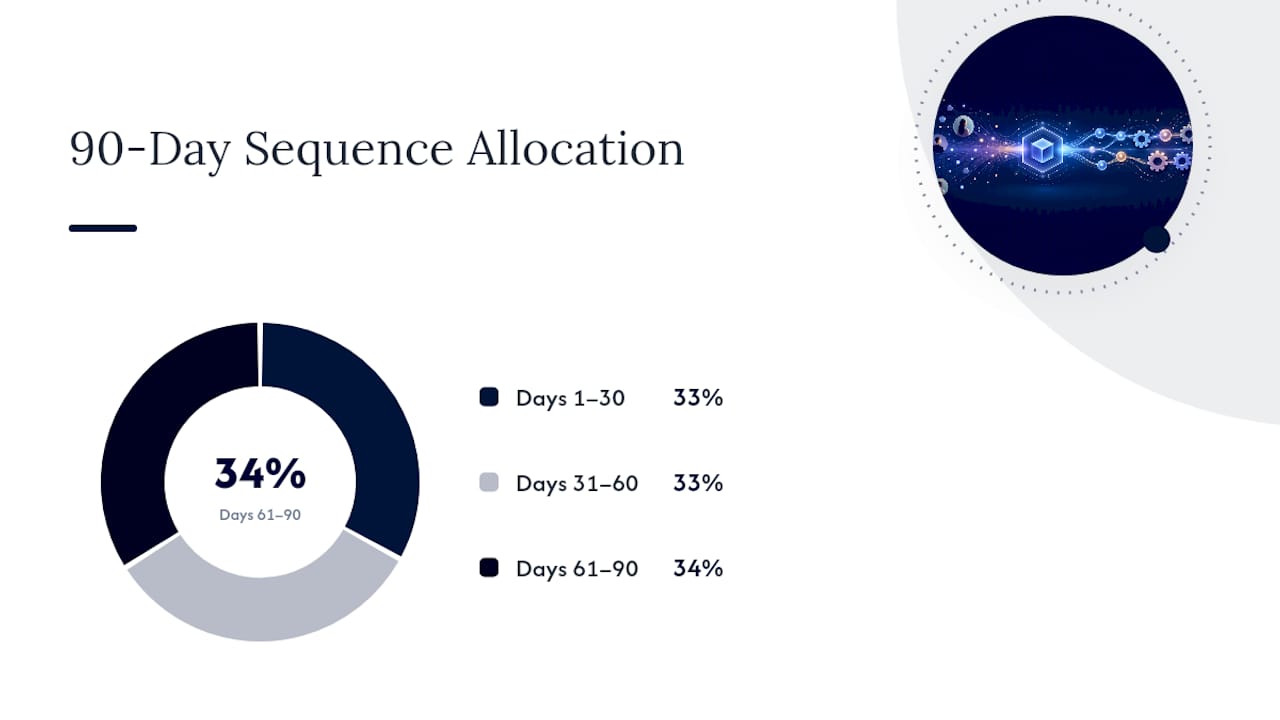
- Days 1 to 30: Recruit 5 to 15 creators within a single platform and audience segment. Track response rate, posting rate, and early conversion signals per creator.
- Days 31 to 60: Hold performance steady across at least two reporting cycles before expanding creator count or budget. Watch CPA and ROAS thresholds, not just impressions.
- Days 61 to 90: Once the three-quarter stability rule holds, decide whether to scale the winning segment internally or bring in a performance partner to accelerate volume.
Pro Tip: If your test cohort hits its CPA target but your team can't process onboarding fast enough to add creators, that's an operations problem, not a strategy problem. Fix the bottleneck before you scale spend.
A commission-only partner offering guaranteed view volume tends to fit best right at that final gate, when the model is proven and the constraint is execution speed rather than strategy.
What Most Teams Get Wrong About Scaling
The teams that stall out almost always try to scale headcount before they scale process. They hire a second coordinator to handle more creators manually instead of automating the shortlist rerun and outreach sequencing that coordinator was already doing by hand. That's backwards. Automation should absorb repeatable work first; people should absorb judgment calls second.
The other pattern worth naming: programs that treat guaranteed-view or performance-based partnerships as a last resort instead of a scaling accelerant. A commission-only model that only charges for verified results is often the more efficient path once you've validated an offer and just need volume, not another round of strategy debate.
— Jax
A Faster Path to Scaling Verified Views
A commission-only creator network built specifically for consumer tech apps allows you to pay only for verified organic views a creator campaign actually delivers, not a retainer that's owed regardless of results.
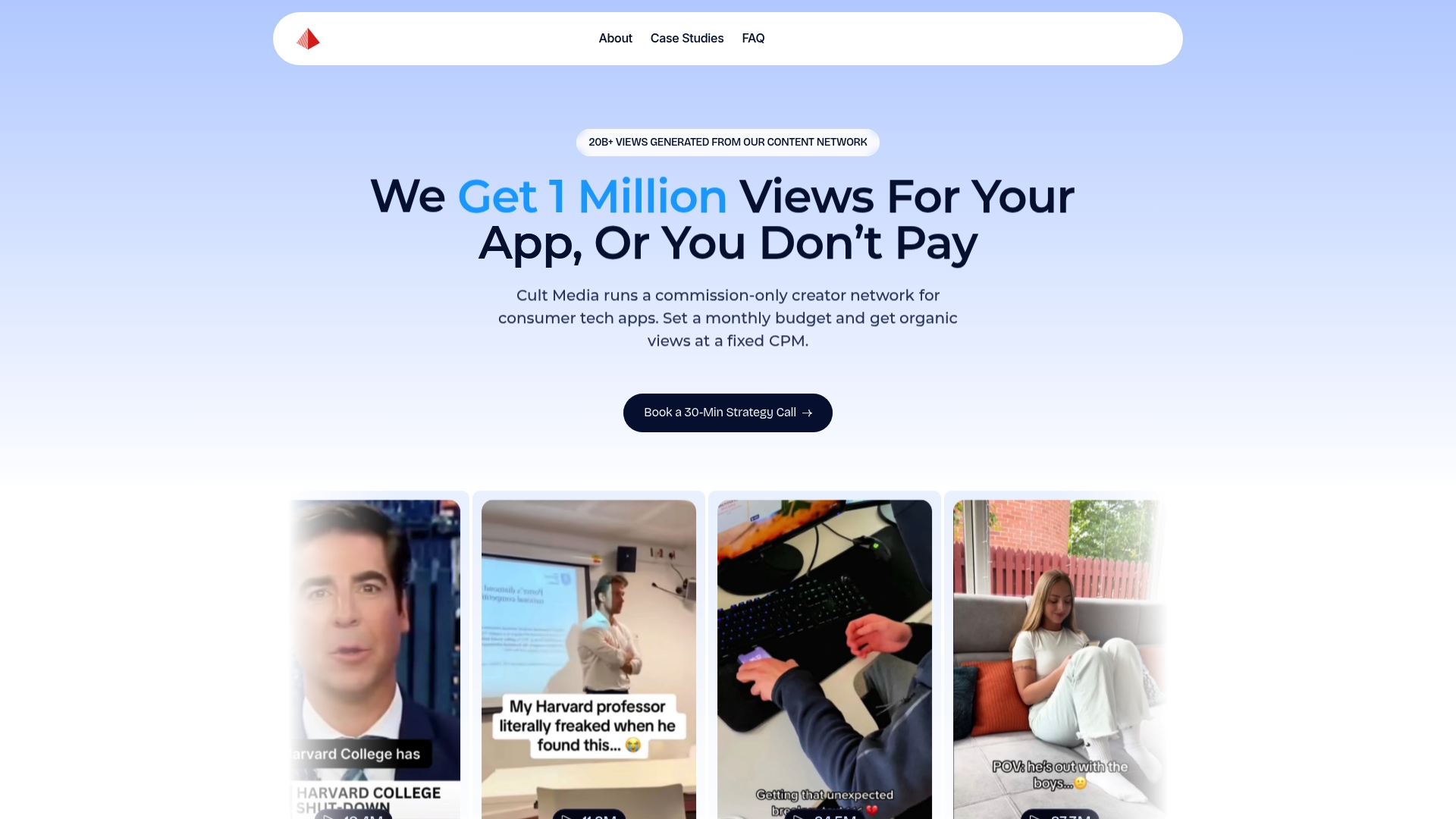
That model fits best once your program has already cleared the test-and-scale gates described above: you know your audience segment, your creative format converts, and the constraint is now volume, not strategy. Instead of hiring another coordinator to manually chase more creators, some networks handle sourcing, content creation, and multi-platform distribution, converting views into app downloads on a fixed CPM tied to guaranteed delivery. If your app-driven growth program is ready for that next phase, see how the guaranteed-view model works at Cult Media and get a sense of what a commission-based scale-up could look like for your budget.
Sources
- Influencer Marketing Benchmark Report 2024
- Influencer marketing strategy: The results-driven playbook for 2026
- Enterprise influencer marketing
- Influencer marketing strategy (Shopify Enterprise)
FAQ
How many influencers make over $100,000?
Public data on creator earnings above that threshold isn't reliably tracked across the industry, since most creator income figures come from self-reported surveys with wide variation by platform and niche. What's clearer is that consistent, higher earnings tend to concentrate among micro and macro creators with proven conversion rates rather than raw follower count alone.
What is the 5-3-2 rule in influencer marketing?
The 5-3-2 rule is a content-mix guideline suggesting 5 pieces of curated or third-party content, 3 pieces of original content, and 2 personal or behind-the-scenes posts out of every 10, though definitions vary by source and it's more a social media planning heuristic than a strict influencer marketing standard.
What are five niches commonly used by influencers?
Beauty, fitness and wellness, personal finance, tech and gaming, and food and lifestyle are among the most active influencer niches, largely because they generate high-frequency content that supports affiliate links, promo codes, and app-download conversions.
What are good influencer programs for small creators?
Programs that pay flat fees or hybrid base-plus-performance rates for nano and micro creators tend to work well for smaller creators, since performance-based models reward engagement quality over sheer reach. A commission-only network that ties pay to verified views rather than follower count also lowers the barrier for smaller creators to earn consistent income.
How do you know when to move from testing to scaling an influencer program?
Move from testing to scaling once your CPA or ROAS holds steady across at least three consecutive reporting cycles with your test cohort, not after one strong week. That stability signal, paired with an operations setup that already runs discovery and reporting without manual bottlenecks, is what confirms the program is ready for volume.