An effective creator onboarding process delivers a signed contract, a complete onboarding packet, and an approved first deliverable inside seven to ten days. Get the standardized SOP right and you get faster time-to-content, lower creator churn, cleaner compliance records, and KPIs you can actually measure. Get it wrong and you get missed deadlines, disclosure violations, and creators who ghost after one round of revisions.
TL;DR:
- An effective onboarding process should deliver a signed contract, onboarding packet, and first approved deliverable within seven to ten days to prevent delays and compliance issues.
- Properly defining campaign objectives and establishing a standardized SOP before outreach reduces onboarding delays and clarifies expectations for all teams involved.
- Verification steps, clear contracts, and a compliance-focused approach are essential to avoid legal and disclosure violations that can derail campaigns.
- Automating repeatable onboarding steps, such as intake, vetting, and reminders, enables scaling beyond five creators without adding headcount.
- Managed onboarding partners like Cult Media can significantly reduce setup time by handling verification, contracts, and compliance, allowing brands to focus on creative approval and KPIs.
Table of Contents
- Getting Your Team Ready Before You Onboard a Single Creator
- How Should Brands Approach Initial Outreach and Contracting?
- What Goes Into the Onboarding Packet and First Brief?
- What Compliance and Disclosure Training Do Creators Actually Need?
- Managing Assets, Approvals, and the Pre-Flight Check
- What Timeline and KPIs Signal a Healthy Onboarding Process?
- Scaling Onboarding Without Adding Headcount
- Why Onboarding Deserves the Same Rigor as Vendor Operations
- When a Managed Onboarding Partner Makes More Sense Than Building In-House
- Sources
- FAQ
Getting Your Team Ready Before You Onboard a Single Creator
The creator onboarding process breaks down before it starts when internal teams aren't aligned on what "done" looks like. Before you send a single outreach message, define the campaign objective in concrete terms. Are you chasing brand awareness, app installs, or performance metrics like cost per install? Each goal changes what a "good" deliverable looks like, and creators need that clarity as much as your internal team does.
A one-page campaign summary prevents the single biggest source of onboarding delay: cross-team confusion. Build it alongside a RACI matrix so legal, creative, and growth all know who approves what and by when.
Before outreach begins, lock in your operational stack:
- An intake form to standardize creator applications and audience data.
- An e-signature tool for contracts (DocuSign or a comparable platform).
- A centralized asset repository for briefs, references, and submissions.
- A tracking setup that ties content back to installs or conversions.
Treating onboarding like a platform operation from day one, rather than an improvised email thread, is what separates programs that scale from ones that stall at a dozen creators.
How Should Brands Approach Initial Outreach and Contracting?
Outreach messages that convert share three traits: they state the campaign in one sentence, name the compensation model clearly, and give a specific reply deadline (48 to 72 hours is standard). Vague pitches get ignored. Specific ones get answered.
Once a creator responds with interest, run this sequence before any content gets discussed:
- Verify account ownership through platform-native tools or screen-recorded proof of login access.
- Check audience fit using engagement rate, follower demographics, and content history against your target user profile.
- Confirm payment identity, including tax documentation appropriate to the creator's country of residence.
- Draft the contract covering deliverables, usage rights (organic only versus paid amplification), disclosure obligations, and a payment schedule tied to milestones, not just final delivery.
Treating onboarding as a compliance-first operation, with verification before creative discussion, is what prevents the mid-campaign surprises that cost brands both money and legal exposure.
What Goes Into the Onboarding Packet and First Brief?
The moment a contract is signed, the creator introduction guide you send determines whether the first deliverable lands on time or drags into a third revision cycle. A complete onboarding packet includes:
- A signed copy of the contract for the creator's records.
- A one-page brand overview (voice, values, and what to avoid).
- The first brief.
- Two to three reference videos showing the format you want.
- Step-by-step submission instructions, including file naming and upload location.
- A payment summary showing amounts and dates.
Structure the brief itself in three layers: why (the campaign objective and the hook you're chasing), what (mandatory elements like a specific CTA, disclosure tag, or product shot), and how (format, length, and a linked example). Creators who understand the objective, not just the constraints, consistently produce stronger first drafts, because they're solving the actual problem instead of guessing at it.
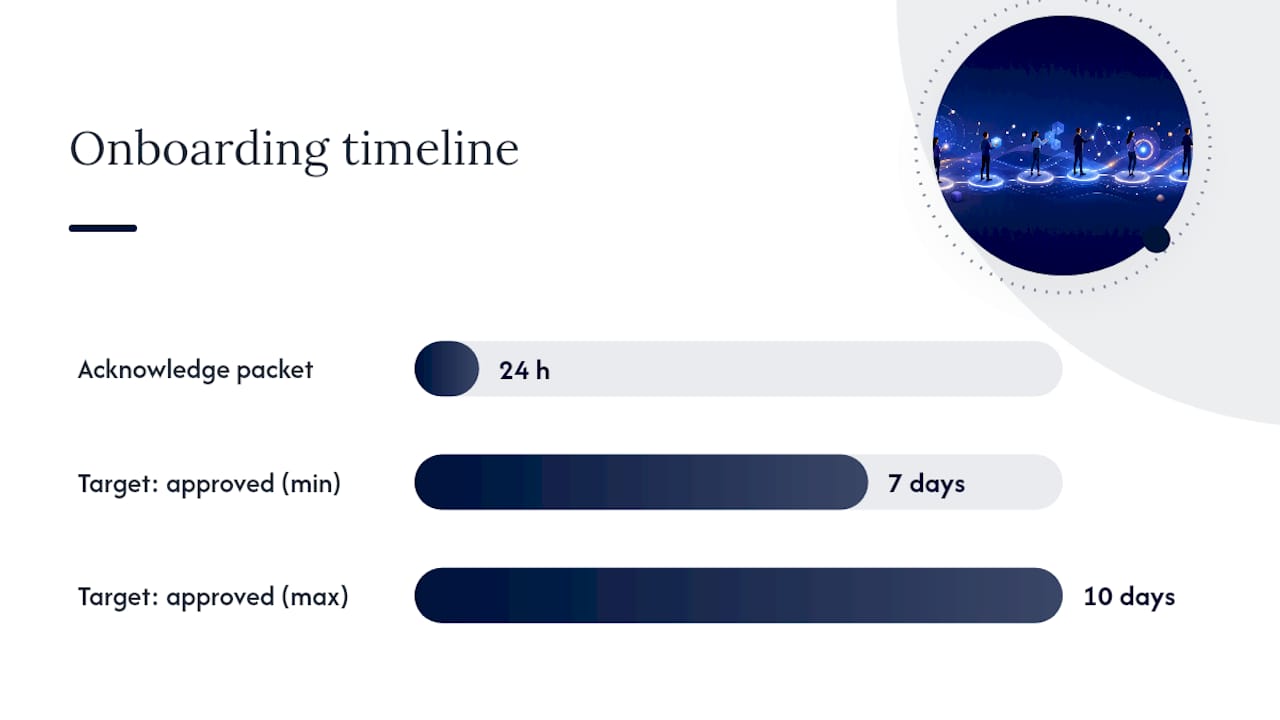
Set a 24-hour SLA for creators to acknowledge receipt of the packet, and require a simple confirmation click or reply. A standardized SOP with a 7 to 10 day target from signature to approved deliverable measurably reduces churn compared to open-ended timelines.
Pro Tip: Keep the first brief small on purpose. A tightly scoped first assignment lets a new creator prove they can follow instructions and hit disclosure requirements before you hand them anything more complex.
For brands building this out from scratch, creator brief examples that have actually been used in live campaigns save you from reinventing the format.
What Compliance and Disclosure Training Do Creators Actually Need?
Skipping disclosure training is the fastest way to turn a good campaign into a regulatory problem. The FTC's guidance for social media creators requires disclosures to be clear and hard to miss, not buried in a hashtag block at the bottom of a caption.
Give creators format-specific examples they can copy directly:
- Static posts and Reels: "#ad" or "#sponsored" placed in the first line of the caption, not after a "see more" cutoff.
- Overlays on video content: a visible on-screen disclosure that persists for the relevant portion of the clip.
- Live streams: a verbal disclosure repeated periodically, not stated once at the start.
For claims-sensitive categories, like health apps or financial tools, add a contract clause requiring substantiation for any performance or outcome claim before it airs. Close the loop with a short completion checklist creators sign off on, confirming they understand disclosure placement and brand-safety limits. Vetted disclosure wording from affiliate compliance resources can supplement your own examples when creators need more than one reference point.
Managing Assets, Approvals, and the Pre-Flight Check
Asset chaos kills more launch dates than bad creative does. Set up a central repository with a consistent naming convention (campaign code, creator handle, version number) and clear permission tiers so creators upload but can't overwrite approved final files.
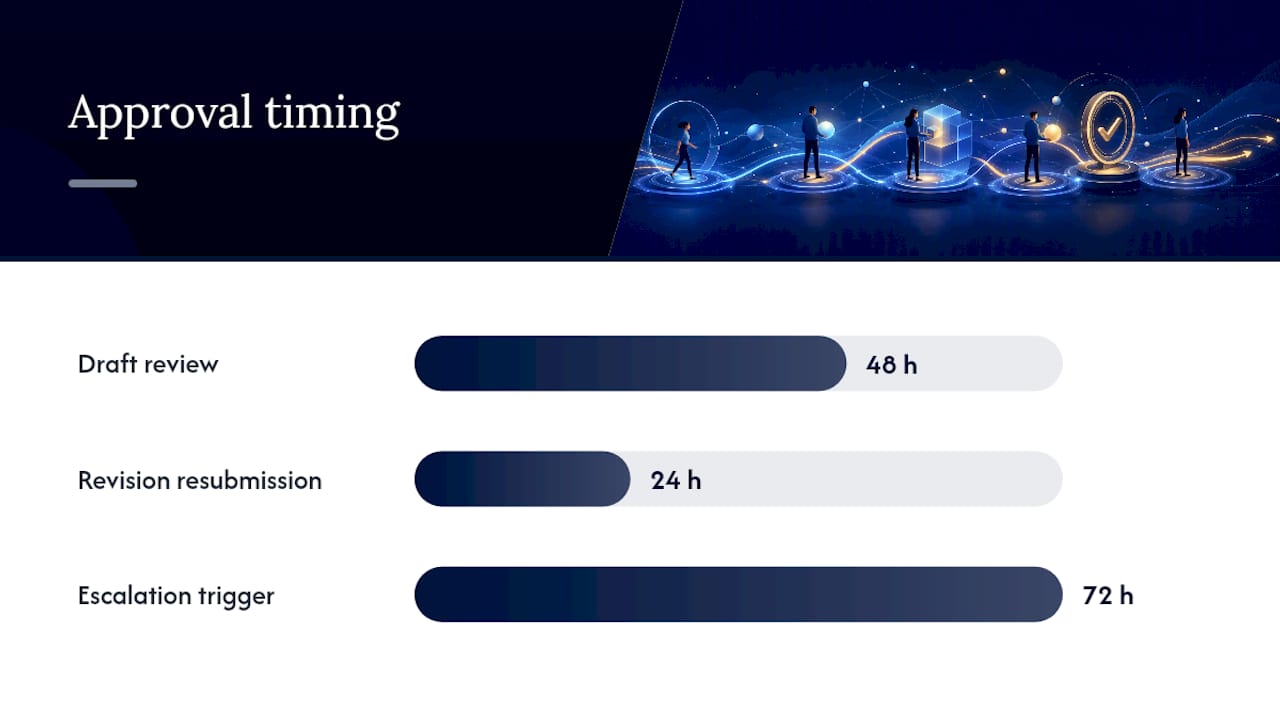
Run approvals in three stages:
- Draft review within 48 hours of submission.
- Revision resubmission within 24 hours of feedback.
- Final sign-off with an escalation trigger if any stage stalls past 72 hours.
Before anything goes live, a pre-flight checklist should confirm disclosure placement, CTA and link accuracy, claim-to-substantiation match, format specs, and tracking parameters. A minimal compliance baseline built around identity, disclosure, payment, and pre-flight checks covers the failure points that cause most launch-day scrambles. Skipping any one of these four is where avoidable legal and brand-safety exposure tends to originate.
What Timeline and KPIs Signal a Healthy Onboarding Process?
The target sequence is signed contract, acknowledged packet within 24 hours, first deliverable within 7 to 10 days, and approval within 72 hours of submission. Track these signals during onboarding to catch problems before they become pattern:
- Submission speed against the agreed deadline.
- Revision count on the first deliverable (more than two rounds is a warning sign).
- Approval SLA adherence on your team's side, not just the creator's.
- Early engagement metrics, like view-through rate or click-through, benchmarked against your campaign goals.
If a creator misses the first deadline without communication, retrain with a clearer brief before assigning a second one. If revisions exceed three rounds on a simple ask, that's a fit problem worth addressing before the contract renews. A creator analytics tool makes tracking these signals across a growing roster far less manual.
Scaling Onboarding Without Adding Headcount
Manual onboarding works at five creators and breaks at fifty. The fix is automating the repeatable steps: intake, vetting, e-signature, packet delivery, reminder sequences, and first-brief assignment. Automated onboarding steps reduce time-per-creator from days to minutes, which is the difference between a program that scales and one that requires a full-time coordinator per ten creators.
Practical triggers worth building:
- E-signature completion automatically releases the onboarding packet.
- A 48-hour silence triggers an automated reminder, then a 96-hour silence triggers escalation to a human.
- Approved first deliverables automatically assign the next brief.
Cult Media applies this exact operating model across its creator network for consumer tech apps, running verification, contracting, and brief delivery as a repeatable pipeline rather than a manual chore for every new creator added to a campaign.
Pro Tip: Build your reminder cadence before you need it. Teams that wait until a creator goes silent to figure out an escalation process lose days they could have automated away entirely.
For approval routing specifically, a content moderation workflow built for creator campaigns handles the stage-gating that manual Slack threads consistently mishandle at scale.
Why Onboarding Deserves the Same Rigor as Vendor Operations
Most brands still treat creator onboarding as an admin task bolted onto a media plan. That's backward. Onboarding is the operating system the entire program runs on, and treating it like vendor operations, centralized, templated, and measured, is what separates teams running fifty creators smoothly from teams drowning in five.
A simple validation check: run a 30 to 60 creator batch through your SOP and measure the acknowledgment rate, first-deliverable timing, and revision count before you scale further. If those numbers hold steady as volume grows, the SOP works. If they degrade, fix the packet or the brief before adding more creators.
— Jax
When a Managed Onboarding Partner Makes More Sense Than Building In-House
Building the SOP above in-house takes real time, and most marketing teams are running it alongside a dozen other priorities. Cult Media is the alternative to building that operation from scratch: a commission-only creator network built specifically for consumer tech apps, where you pay only for verified views a campaign actually delivers, not a retainer that runs regardless of results.

That structure removes most of the onboarding burden described in this guide. Cult Media's creator network is already vetted, contracted, and trained on disclosure and brand-safety standards, so your team skips the verification, e-sign chasing, and compliance training cycle entirely. What's left for you is approving creative and watching the KPIs that matter, install volume and cost per view, move in the right direction.
If your team is weighing in-house onboarding against a managed model, review how Cult Media's creator network operates and request a campaign consult to see what a guaranteed-view partnership would look like for your app.
Sources
- How Do You Build an Automated Onboarding Workflow for UGC Creators?
- Onboarding creators at scale: a playbook for brand-compliant operations
FAQ
What Are the Main Stages of a Creator Onboarding Process?
The core stages are outreach and verification, contracting, packet delivery and brief acknowledgment, first deliverable and approval, and ongoing performance tracking. Most standardized programs compress the first four stages into 7 to 10 days from signature to approved content.
Does Completing Onboarding Mean a Creator Is Officially Hired?
Onboarding typically follows contract signature, so a creator has already agreed to terms before the onboarding packet arrives. The onboarding stage confirms the creator understands the brief and compliance rules before any payment milestone is triggered.
What Documents and Steps Are Required to Onboard a New Creator?
A complete process requires identity and audience verification, a signed contract covering usage rights and payment terms, a disclosure compliance acknowledgment, and delivery of an onboarding packet with the first brief. Skipping verification or the disclosure step is the most common cause of onboarding failures.
How Long Should Creator Onboarding Take From Contract to First Content?
A well-run creator onboarding process targets 7 to 10 days from signed contract to an approved first deliverable. Programs that consistently hit this window report lower creator churn than those with open-ended timelines.
How Does Cult Media Handle Onboarding for Its Creator Network?
Cult Media manages verification, contracting, and disclosure training internally across its creator network for consumer tech apps, so brands skip the manual onboarding steps and move straight to reviewing creative tied to guaranteed view delivery.