Six hook styles consistently outperform the rest on TikTok right now: curiosity gap, contrarian, result-first, micro-story, stat shock, and direct address. Every one of them earns its place by exploiting the same mechanic. Average viewers decide whether to keep watching within the first 1 to 1.5 seconds, so the opening line is doing more work than the rest of the script combined.
Here are eight templates you can paste straight into your next script or on-screen text.
- Curiosity gap: "Nobody tells you this about [topic] until it's too late."
- Contrarian: "Everyone says [common advice]. That's why they're failing at it."
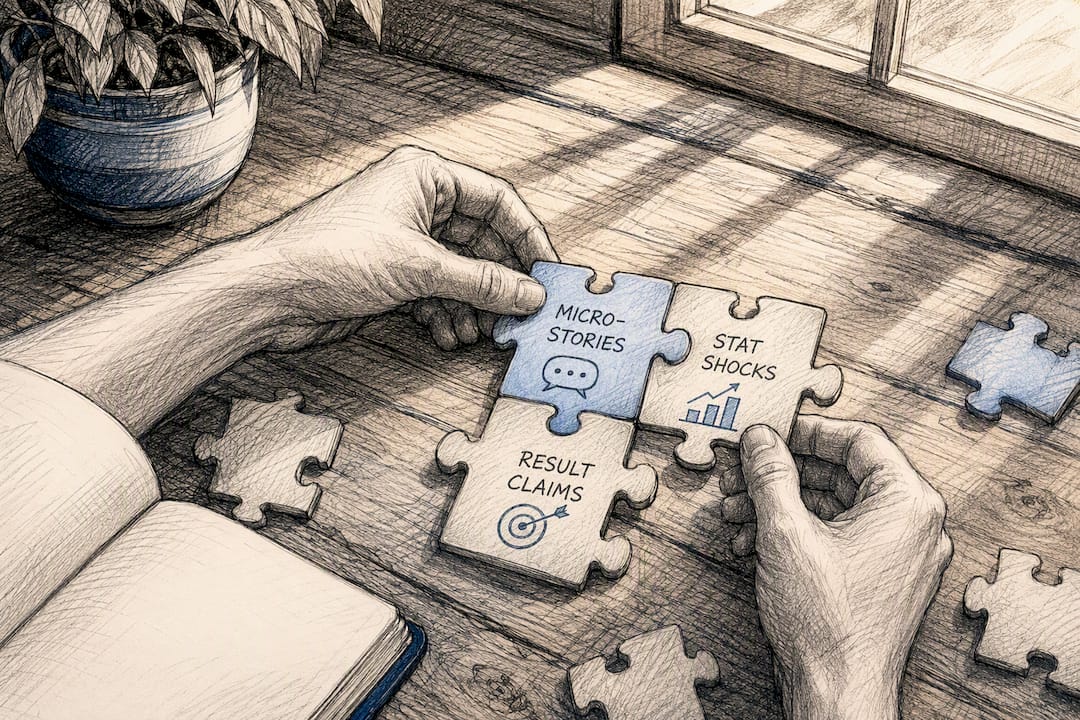
- Result-first: "This got me [specific result] in [timeframe]."
- Micro-story: "So I was mid [activity] when [unexpected thing] happened."
- Stat shock: "[X]% of [audience] are doing this wrong, and it's costing them."
- Direct address: "If you're a [specific audience], stop scrolling."
- Social proof: "I asked 50 [experts/customers] the same question. The answer surprised me."
- Before/after: "This is what my [thing] looked like before I tried [method]."
Pro Tip: Match the template to your format. A result-first hook works best when you have a visual payoff to cut to within two seconds; a micro-story hook needs a mid-action opening shot, not a talking head introducing the topic.
Key Takeaways
The hooks that consistently win on TikTok combine a specific claim, a fast pattern interrupt, and a payoff delivered inside the first 1.5 seconds of the video.
| Point | Details |
|---|---|
| Six hook styles win most often | Curiosity gap, contrarian, result-first, micro-story, stat shock, and direct address cover most high-performing openings. |
| The real deadline is 1.5 seconds | Viewers decide to keep watching almost instantly, so front load the specific detail instead of easing into it. |
| Stack two triggers for stronger hooks | Combining curiosity with social proof outperforms either trigger used alone. |
| Test with a 12-post protocol | Run two videos per hook style and track first 3-second retention, watch time, completion rate, rewatch rate, and reach. |
| Scale winners with Cult Media | Cult Media's commission-only creator network applies proven hook formulas across a wider creator roster with guaranteed view campaigns. |
Table of Contents
- What Is a TikTok Hook, and Why Does It Decide Your Reach?
- What Makes a Hook Actually Work? A Quick Checklist
- Categorized TikTok Hooks Examples You Can Copy Right Now
- How to Test Your Hooks and Know Which One Actually Wins
- Your Pre-Publish Hook Checklist
- Sources
- FAQ
What Is a TikTok Hook, and Why Does It Decide Your Reach?
A TikTok hook is the first one to three seconds of a video—the window where a viewer decides to keep watching or swipe away. That decision happens almost instantly. Research on viewer behavior puts the average decision window at roughly 1 to 1.5 seconds, which is faster than most creators plan for when they script an intro.
The algorithm treats that early retention as a signal, not an afterthought. TikTok's own analytics track how many viewers drop off in the opening seconds, and that number feeds directly into how widely a video gets pushed to the For You Page. A strong hook does three concrete things:
- It raises initial retention, which is the single biggest lever for algorithmic distribution.
- It increases completion rate, since viewers who survive the first three seconds tend to watch the rest.
- It compounds across a posting schedule, because consistent hook quality trains your audience to expect a payoff and keep tapping through your feed.
The mechanism behind 40+ viral hook formulas confirms the same pattern: the opening 1 to 3 seconds are what the distribution system measures, and everything downstream, including reach, follows from that measurement.
What Makes a Hook Actually Work? A Quick Checklist
A hook either passes or fails on a handful of concrete elements. Run any draft against this checklist before you hit record.
- Psychological trigger. Curiosity, contrarian tension, fear of missing out, or social proof. Pick one deliberately instead of hoping the topic alone carries it.
- Specificity. "I lost 12 pounds in six weeks" beats "I got healthier" every time. Vague openers give viewers no reason to stay.
- Pattern interrupt. A visual or audio break from what the viewer just scrolled past. That could be a jump cut, a zoom, or a sudden change in volume.
- Clear stake. A question or benefit that's obvious within the first sentence, not implied three lines later.
- Timing. The trigger has to land inside that 1 to 1.5 second window, not after a logo animation or a slow pan.
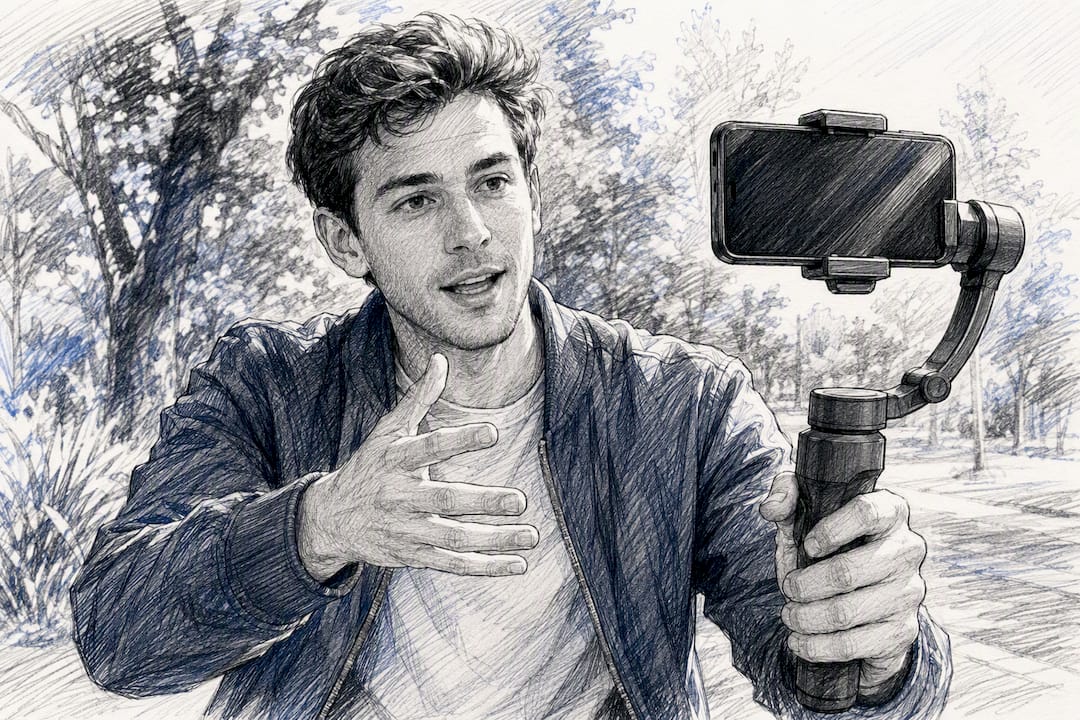
Here's each one in practice. A specificity example: "This exact grocery list cut my food bill by $40 a week" outperforms "How I save money on groceries" because the number gives the brain something concrete to latch onto. A pattern interrupt example: opening mid-motion, like catching yourself already talking with your hands raised, reads as more urgent than starting with a static shot and a greeting.
Stacking triggers works better than relying on one. Categorized pattern research found that combining two triggers, like curiosity plus social proof ("I asked 50 dermatologists this one question, and the answer shocked me"), produces measurably stronger openings than either trigger alone.
Pro Tip: Because the average viewer makes a keep-watching decision in about a second and a half, treat your hook line as the entire pitch, not a warm-up. If you can't say the stake out loud in under three seconds, cut the sentence in half.
Categorized TikTok Hooks Examples You Can Copy Right Now
This is the working list. Ten hook styles currently dominate the For You Page, and the categories below cover the ones creators reuse most successfully across niches.
1. Curiosity gap hooks
- "The one thing nobody warns you about before you [action]."
- "I didn't believe this would work until it did."
- "There's a reason your [thing] isn't working, and it's not what you think."
- "What happened next changed how I do this forever."
- "This is the part of [process] nobody shows you."
- "I found out why this actually happens, and it's not what I expected."
Template: "Nobody tells you [surprising fact] about [topic] until [consequence]." Swap the bracketed phrases for your niche; a skincare creator might write "Nobody tells you retinol purges before it clears until you've already given up on it."
2. Contrarian and bold claim hooks
- "Stop doing [popular advice]. It's actively hurting your [goal]."
- "Everyone's wrong about [topic], and here's the proof."
- "The advice you were given about [topic] is outdated."
- "[Popular method] is a waste of your time. Here's what works instead."
- "I stopped [common habit] and my [result] improved."
- "This 'expert tip' everyone repeats is actually backwards."
A verbal delivery with a flat, confident tone sells the contrarian angle better than a smile. Confidence is the pattern interrupt here, not the visual.
3. Micro-story hooks
- "So I was halfway through [activity] when [thing] happened."
- "Three days ago I would never have said this, but..."
- "This started as a normal Tuesday until [event]."
- "My [family member/coworker] said something that stuck with me."
- "I almost didn't post this, but here's what happened."
- "The last time I tried this, it went completely wrong."
Micro-stories work because they start mid-scene instead of setting up context first. That immediate narrative gap keeps viewers watching to find out how the scene resolves.
4. Result-first hooks
- "This got me [specific result] in [specific timeframe]."
- "I went from [starting point] to [end point] doing this one thing."
- "[Number] followers in [timeframe] using this exact method."
- "My [metric] doubled after I changed this one habit."
- "Here's the exact [output] I got from [input]."
- "This saved me $[amount] in one month."
5. Stat shock hooks
- "[X]% of people are doing this completely wrong."
- "Only [small number] out of [large number] actually know this."
- "This one number should scare every [audience]."
- "The data on this is worse than you think."
Use verified numbers whenever possible. Templates built around shock statistics, such as the claim that most TikTok videos never break 1,000 views, only land credibly if the figure is accurate or clearly framed as illustrative rather than presented as fact.
6. Direct address hooks
- "If you're a [specific audience], you need to hear this."
- "Small business owners, this is for you."
- "If you've ever [specific situation], keep watching."
- "This is your sign to stop [common mistake]."
7. Product and UGC discovery hooks
Sellers and app marketers need a different tone. Leading with an obvious ad framing kills reach before the algorithm even registers the video. A better move is opening with a discovery line that keeps the native feel intact.
- "I found this on TikTok Shop and honestly wasn't expecting much."
- "This app fixed a problem I didn't think had a solution."
- "I almost scrolled past this, and I'm glad I didn't."
- "Someone in my comments told me to try this, so I did."
Template for product creators: "I found [product] because [authentic reason], and here's what actually happened." Show the result within the first three seconds, then let the discovery framing carry the rest of the video without switching into sales language.
How to Test Your Hooks and Know Which One Actually Wins
Guessing which hook works best wastes posting slots. Run a small, controlled experiment instead.
- Pick six hook styles from the categories above. Curiosity, contrarian, result-first, micro-story, stat shock, and direct address is a solid starting set.
- Film two videos per style, for 12 posts total. Keep everything else constant: video length, thumbnail style, caption structure, and posting time.
- Post on a consistent schedule so TikTok's algorithm evaluates each video under similar conditions.
- Track five metrics in TikTok Analytics: first 3 second retention, average watch time, completion rate, rewatch rate, and reach. This exact combination of a 12-post protocol with two videos per style is the setup that gives you enough signal without burning a month of content.
- Log results in a simple spreadsheet with columns for post date, hook style, exact hook copy, sound used, first 3 second retention, watch time, completion rate, reach, and a net score.
- Score each video on a weighted composite of those five metrics and rank by hook style, not by individual post, since two data points per style smooths out one-off variance.
Different niches favor different formulas. Fitness content tends to reward bold claims, finance content leans on stat shocks, and how-to content performs best with result-first and process hooks, so don't assume a trending hook from another niche will transfer directly to yours.
Pro Tip: Rotate your visuals and delivery style even while testing the same hook category. Repeating the identical setup across all 12 posts trains your existing followers to skip your intros, which quietly poisons your retention numbers before the test even finishes.
Your Pre-Publish Hook Checklist
Run every script against these before you record.
- Do: Deliver the hook line inside the first 1 to 3 seconds, before any intro animation.
- Do: Use a specific number, name, or timeframe instead of a vague claim.
- Do: Sync a visual or sound cue to the exact moment the hook lands.
- Don't: Open with a greeting, your name, or "so today I'm going to talk about."
- Don't: Use small, low-contrast on-screen text that's unreadable at a glance.
- Don't: Bury your call to action so late that low-retention viewers never see it.
Scoring rule: if your draft hits four out of these six checks, it's ready to film.
Why Most Creators Underrate the First Second, Not the First Three
The three-second rule gets repeated so often that creators plan around it, but the real cutoff is closer to 1 to 1.5 seconds. That gap matters because it changes what you optimize for. A hook that builds slowly across three seconds, even a good one, has already lost a portion of its audience before it finishes the setup. The creators who consistently win aren't writing better hooks. They're writing hooks that resolve faster, front loading the specific detail or visual payoff instead of easing into it. When you're scaling this across dozens of app launches and product drops, that half second of difference is exactly the kind of variable a dedicated growth partner tests systematically, since it's easy to overlook when you're producing content solo.
Scale Your Winning Hooks With a Performance-Based Creator Network
Once you've found the hook style that wins for your app, the bottleneck stops being creative and starts being volume. Cult Media runs a commission-only creator network built specifically for consumer tech apps, pairing your winning hook formulas with a wider creator roster and guaranteeing a set number of views instead of charging a flat retainer regardless of outcome.
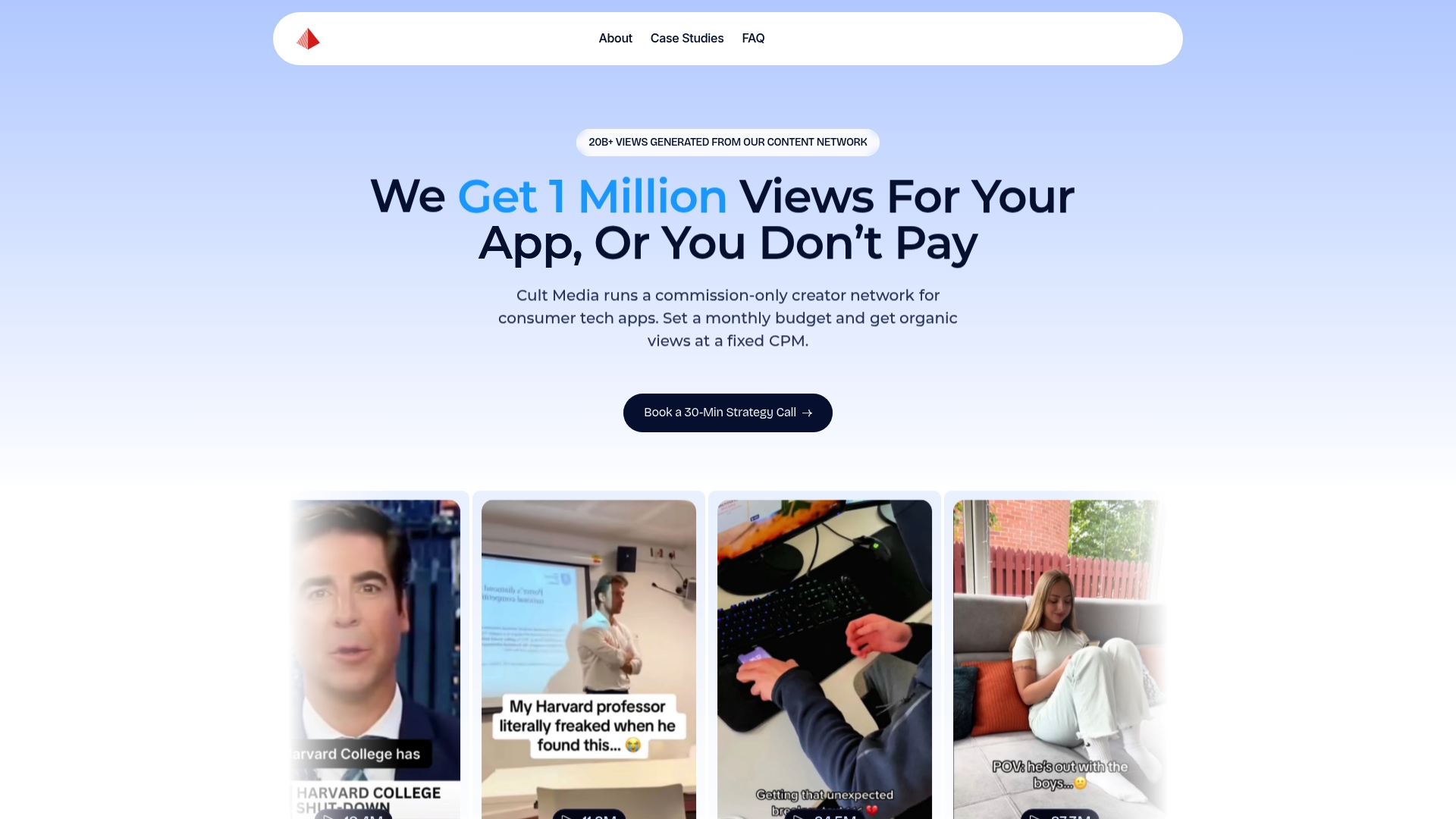
Two situations call for that kind of partner. If you're launching an app and need reach fast, a guaranteed-view campaign removes the trial-and-error period entirely. If you've already found a hook that converts and want to push it across dozens of creators at once, Cult Media's performance-based creator playbook applies the same testing logic covered above, but at a scale a solo creator can't match. You only pay for verified views, which keeps the incentive aligned with actual results rather than production hours billed. Check current campaign options and guaranteed-view terms directly on the Cult Media site to see if your app fits the model.
Sources
- How to Write TikTok Hooks That Stop the Scroll in 3 Seconds (40+ Formulas) | Metadata Reactor
- TikTok Hook Examples: 30+ Categorized Patterns That Stop the Scroll (2026)
- TikTok Hooks: 40+ Viral Hooks by Type, with the Formula Behind Each (2026)
- Best TikTok Hooks in 2026: What's Working Right Now | Viral Finder
- 100+ TikTok Hook Ideas for Every Niche (2026) — Stop the Scroll | WildandFree Tools
FAQ
What is a good TikTok hook?
A good hook makes a specific claim or promises a clear payoff within the first 1 to 3 seconds, often using curiosity, a bold contrarian statement, or a concrete result to stop the scroll.
What is a good hook example?
"This got me [specific result] in [specific timeframe]" works because it pairs a specific result with a specific timeframe, giving viewers an immediate reason to keep watching.
What are some examples of viral hooks?
Micro-story openers that start mid-scene, stat-shock lines built on verified numbers, and result-first claims tend to perform consistently well across niches, according to categorized pattern research.
What's a catchy title for TikTok?
A catchy title mirrors your hook: specific, benefit-driven, and free of vague phrasing, such as "The Grocery List That Cut My Bill by $40 a Week" instead of a generic topic label.
How many hook styles should I test before picking a winner?
Testing six distinct hook styles across 12 posts, two videos per style, gives enough signal to compare retention and watch time without spending a full month on the experiment.