TikTok is the stronger engine for trend-driven, viral reach, while Snapchat leads for AR-driven, private engagement with younger audiences. The right choice depends on the campaign goal: broad discovery and cultural reach favor TikTok, while intimate, high-frequency engagement with a loyal younger base favors Snapchat. We break down the features, audience data, and marketing mechanics behind that verdict below.
TL;DR:
- TikTok ranks videos by watch time, completion, shares, and rewatches rather than follower count, so test fast hooks and publish consistently.
- Snapchat reported 477 million daily and 943 million monthly active users in Q3 2025, but monthly reach should not be treated as daily exposure.
- Among US adults aged 18 to 29, 63% use TikTok; prioritize daily active users over estimated reach when habitual exposure matters.
- Snapchat’s Audience Match uses existing customer lists for retargeting, while TikTok Spark Ads pair creator posts with measurable click paths for acquisition.
- Run a small, matched test on both platforms with mobile measurement partner tracking, then judge acquisition by installs, signups, or purchases rather than views.
Table of Contents
- Key differences and similarities at a glance
- TikTok: features, formats, and creator guidance
- Snapchat: features, AR, and immersive engagement opportunities
- Who uses each app: demographics and engagement statistics
- Content discovery and algorithm behavior: how content spreads
- Marketing value: ad formats, targeting, and use cases
- How to choose: a short decision framework and checklist
- Cult Media: practitioner playbook for running creator-led campaigns on both platforms
- A marketer's take on choosing between TikTok and Snapchat
- How we help you scale creator-led campaigns on both platforms
- FAQ
- Sources
Key differences and similarities at a glance
TikTok and Snapchat both built their businesses on short, vertical video, but the core experience diverges sharply. TikTok is a discovery engine: its For You feed surfaces content from accounts a user has never followed, based on behavioral signals rather than social connections. Snapchat remains friend-first at its core, built around chat and Stories shared with people users already know, even as Spotlight pushes it toward open discovery.
Both platforms emphasize vertical video, creator tools, and ephemeral or fast-moving content, but they reward different behaviors. TikTok rewards completion rate, rewatches, and shareability within an algorithmic feed. Snapchat rewards frequency of use and camera engagement, particularly through AR Lenses and direct messaging.
- TikTok centers on algorithmic discovery, trend participation, and public virality.
- Snapchat centers on a camera-first home screen, AR experimentation, and private or semi-private sharing.
- TikTok creators optimize for hooks, pacing, and trend timing to earn feed placement.
- Snapchat creators and brands optimize for Lens design, Stories cadence, and Spotlight submission quality.
For marketers, this means TikTok campaigns are built to win attention from strangers, while Snapchat campaigns are built to deepen engagement with an audience that already knows the brand or app. Creative that performs on one platform rarely transfers directly to the other without adjustment to format, pacing, and tone.
TikTok: features, formats, and creator guidance
TikTok's ad and content ecosystem revolves around the For You feed, which blends organic posts, in-feed ads, and creator content into one scrollable stream. Brands can run in-feed ads that look native to the feed, TopView placements that appear the moment a user opens the app, branded hashtag challenges, and live shopping or live-stream formats. Each format assumes the viewer is scrolling fast and deciding within seconds whether to stay.
The algorithm weighs watch time, completion rate, shares, and rewatches more heavily than follower count, which is why accounts with no prior audience can reach millions of views. Industry coverage of TikTok's feature set describes how For You ranking and ad placements are built to reward content that holds attention past the first few seconds, regardless of who posted it.
Creative tactics that consistently perform:
- Open with the payoff or conflict in the first two to three seconds rather than a slow setup.
- Post at a consistent cadence so the algorithm has enough signal to learn what resonates.
- Participate in live trends and sounds early, since trend relevance decays within days.
- Pair paid spend with creator partnerships so ads carry the same native feel as organic posts.
Pro Tip: Test three distinct hooks against the same core video before scaling spend; hook performance is often a better early predictor of success than the full creative.
For US audiences specifically, TikTok reach skews toward adults under 30, which shapes both tone and the pace of creative testing. A faster testing loop, often weekly rather than monthly, tends to outperform a polished but infrequent posting schedule, because the platform's discovery mechanics favor volume and iteration over single high-production assets.
Snapchat: features, AR, and immersive engagement opportunities
Snapchat opens directly to the camera, not a feed, which signals its priority from the first tap. Core features include AR Lenses that overlay effects on a user's face or surroundings, Stories that disappear after 24 hours, Spotlight for algorithmically surfaced short video, and Snap Map for location-based social context. Snapchat's own product documentation outlines this camera-first design alongside its ephemeral chat and Lens tools as the platform's defining features.
Advertisers can run Sponsored Lenses that let users try on a branded AR effect, Snap Ads that appear between Stories, and Audience Match, which lets brands target based on existing customer lists rather than relying solely on platform-inferred interests. Snap Inc. has pointed to its AR capabilities as a strategic differentiator for brands, noting that immersive AR interactions tend to hold attention longer per session than a simple scroll-through view.
Guidance for building on Snapchat's strengths:
- Design Lenses around a single, shareable moment rather than a complex multi-step interaction.
- Use Stories for frequency, posting daily or near-daily to stay visible in a friend-first feed.
- Treat Spotlight submissions like TikTok content, with a fast hook, since it competes in an open discovery surface.
- Layer Audience Match on top of creative testing to retarget users who already resemble existing customers.
Pro Tip: Build one AR Lens per campaign rather than per ad set; Lens production takes longer than static or video creative, so concentrate the investment where the immersive format adds the most value.
Snapchat's engagement model rewards brands willing to invest in a slower-burn relationship built on repeated camera interactions, which suits retention and loyalty goals better than one-off awareness pushes.
Who uses each app: demographics and engagement statistics
Audience age is the clearest signal for matching a campaign to the right platform. In the United States, 63% of adults aged 18 to 29 use TikTok, compared with 44% of those 30 to 49, 30% of those 50 to 64, and just 12% of adults 65 and older. Overall, 37% of US adults use TikTok as of mid-2025, making it a young-skewing platform with a sharp drop-off after age 50.

Snapchat reported 477 million daily active users and 943 million monthly active users in its third quarter of 2025, with year-over-year growth in both metrics. That gap between DAU and MAU points to a large base of monthly visitors who are not opening the app daily, which matters when forecasting how often a campaign's audience will actually see new content.
Analysts at Sprout Social caution that advertiser-facing reach estimates can diverge from verified DAU and MAU figures, and recommend that marketers lean on engagement and session metrics rather than headline reach numbers when planning budgets. A platform's reported reach describes how many accounts a campaign could theoretically touch, not how many people are actively engaging with it, and the distinction changes how a media plan should be sized.
For campaign design, this translates into a simple rule: if the objective depends on daily habitual engagement, prioritize DAU over MAU, and treat reach estimates as a ceiling rather than a forecast.
Content discovery and algorithm behavior: how content spreads
TikTok's For You feed ranks content using watch-time signals, which is why a video with no following can outperform a post from a large account. Snapchat spreads content through a mix of Stories shared within existing friend circles and Spotlight, which functions more like an open discovery feed and rewards similar hook-driven editing.
- TikTok prioritizes completion rate, rewatches, and shares as its core ranking signals.
- Snapchat Stories prioritize consistent posting to friends and followers rather than algorithmic reach.
- Snapchat Spotlight behaves closer to TikTok, surfacing content to strangers based on early engagement.
- Publisher content on Snapchat (Discover) adds a curated layer that functions separately from user-generated Stories.
For measurement, the gap between impressions and meaningful engagement matters on both platforms. A guide to interpreting views versus impressions is useful context here: an impression confirms a creative loaded on screen, while a view or completed watch confirms attention, and campaigns optimized only for the cheaper metric tend to underdeliver on downstream conversions.
Marketing value: ad formats, targeting, and use cases
Each platform supports a different mix of business outcomes based on its ad inventory. TikTok's in-feed ads, TopView, and Spark Ads (which boost organic creator posts) tend to perform best for awareness and top-of-funnel acquisition, since they're built to surface in front of users with no prior brand relationship. Branded challenges and live shopping extend that into engagement and direct response.
Snapchat's Sponsored Lenses and Snap Ads support a similar awareness function but with a more intimate, interactive format, while Audience Match and retargeting tools make it stronger for mid-to-lower funnel work with audiences who already have some brand familiarity.
- For awareness: TikTok in-feed and Spark Ads, or Snapchat Sponsored Lenses, both built to surface in front of new audiences.
- For engagement: Snapchat AR Lenses and Stories ads, which reward interaction time over a single click.
- For acquisition: TikTok Spark Ads paired with creator content, which blends native feel with measurable click paths.
- For retention or retargeting: Snapchat Audience Match layered with existing customer lists.
Behavioral targeting on TikTok relies heavily on in-app signals like watch history and engagement patterns, while Snapchat's Audience Match lets advertisers upload customer data directly, a meaningful difference for brands with an existing user base to retarget. Both platforms integrate with mobile measurement partners, which matters for connecting platform-reported reach to verified install and conversion events rather than relying on self-reported numbers alone.
KPI expectations should match the format: awareness campaigns are judged on reach and video completion, while acquisition campaigns need install, signup, or purchase events tied back through an MMP rather than platform-only reporting.
How to choose: a short decision framework and checklist
Match the platform to the goal before writing a single line of creative.
- Define the primary goal: broad viral awareness points to TikTok; deep engagement with a younger, loyal audience points to Snapchat.
- Map the target audience's age: skew toward under-30 and daily habitual use favors Snapchat's DAU strength; broader reach across the 18 to 49 range favors TikTok.
- Evaluate creative capability: fast, high-volume video production suits TikTok; AR or Lens design expertise suits Snapchat.
- Pilot with matched tracking: run a small test on both with MMP integration before committing a full-quarter budget.
Ask whether the team can sustain weekly creative output, whether measurement goes beyond platform-reported reach, and whether the budget allows testing both before scaling one.
Cult Media: practitioner playbook for running creator-led campaigns on both platforms
We follow a workflow for consumer app campaigns that starts with a creative brief built around the platform's native format, then moves into creator sourcing, organic seeding, and paid amplification once early signals confirm a hook works.
- We test hooks first, then placement mix, before committing budget to a winning creative.
- We validate against downstream events, not just views, using data layered on top of platform reporting.
- We apply a similar loop across platforms, adjusting pacing and creative design as appropriate for TikTok and Snapchat.
Deeper workflow detail lives in our Snapchat influencer marketing guide and our TikTok creator playbook.
A marketer's take on choosing between TikTok and Snapchat
The real mistake is treating this as a single choice. TikTok wins the argument on raw discovery, but Snapchat's camera-first habit loop builds a depth of engagement that a feed-scrolling audience rarely gives a brand. Most consumer apps need both: TikTok to find strangers, Snapchat to keep them close.
— Jax
How we help you scale creator-led campaigns on both platforms
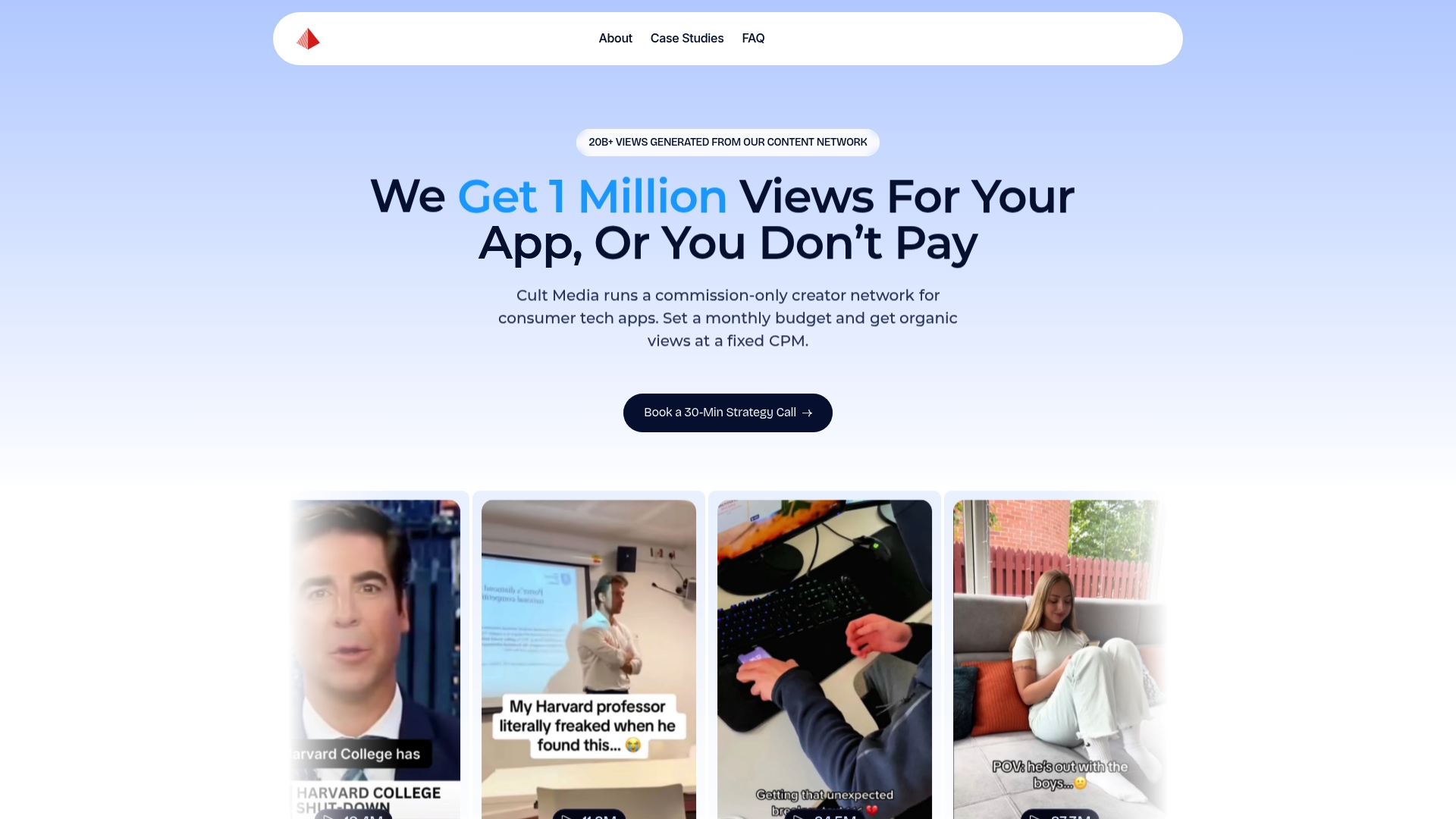
Running a creative testing loop on TikTok while building AR-driven Snapchat engagement takes two different skill sets, and most internal teams only have bandwidth for one. Our commission-only creator network handles both: we source creators, produce native-feeling content, and tie paid distribution to verified organic views rather than a flat retainer.
- We manage creator sourcing and production to help campaigns maintain momentum.
- Our pricing is performance-based, charging against verified views rather than fixed fees.
- We've driven measurable results for consumer app clients, including a 64% reduction in CAC through systematic UGC testing and 42,500 signups at $0.28 each through organic UGC.
See more outcomes in our case studies, or visit Cult Media to talk through a campaign for your app.
FAQ
Are TikTok and Snapchat the same thing?
No, they serve different core behaviors: TikTok is an algorithmic discovery feed for strangers' content, while Snapchat is built around a camera-first home screen, AR Lenses, and messaging between friends. Both support short video, but their ranking systems and social graphs work differently.
What's the 3 second rule on TikTok?
The idea behind the 3 second rule is that a video needs to capture attention within its first few seconds or risk being scrolled past, since TikTok's algorithm weighs early watch-time signals heavily. Strong hooks, a visual payoff, or an immediate question tend to keep viewers watching past that window.
What is the number one social media platform right now?
There's no single platform that holds the top spot across every metric, since rankings shift depending on whether the measure is daily active users, total reach, or ad revenue. Snapchat reported 943 million monthly active users in Q3 2025, while TikTok's reach skews younger with 63% of US adults aged 18 to 29 using the app.
Who pays more, TikTok or Snapchat?
Creator earnings on both platforms vary by audience size, engagement, and the specific monetization or brand deal structure, and neither platform publishes a standard payout rate. Brands and agencies typically negotiate rates directly with creators or run guaranteed-view campaigns priced on verified performance rather than a fixed platform payout.
Sources
- TikTok statistics — Printful
- Snap Inc. Announces Third Quarter 2025 Financial Results
- Snapchat statistics and insights — Sprout Social